

Trending Stories

By Kim Anthony
•
August 13, 2021
It was once said by author, Robert Collier that “Success is the sum of small efforts, repeated day-in and day-out.” While success is inherited for some and earned via hard work for others, there are some characteristics that successful people do share. For many, having a good morning routine is key to maintaining their achievements. Here, we’ll discuss five things that successful people do to start their days. 1. Successful People Do Eat Healthy Breakfasts Studies show eating a healthy breakfast each morning can help improve your concentration and performance, and help give you more physical strength and endurance, according to WebMD. Taking time for a meal in the morning may help you focus on your tasks, and ultimately, accomplish more during the day. 2. Successful People Do Exercise Getting in a morning workout helps prepare you to take on the day. In addition to the numerous health benefits of regular exercise, doing cardio, yoga or some other exercise in the morning can help energize you and wake up your body. 3. Successful People Do Plan the Day Each morning, take time to map out your day. Prioritize your goals and to dos and create a timetable of your activities. You may be better able to adjust to situations that arise over the course of a day and be better prepared to accomplish all your tasks by spending a few minutes scheduling the day in front of you. 4. Successful People Do Check the News Whether it is while you ride the bike in the morning at the gym or sitting at the table eating breakfast, scan the day’s headlines. What’s going on in the world around you may affect your business. Staying up to date on current events can help you prepare for the events you’re expecting or immediately begin developing solutions for those you aren’t. 5. Successful People Do Meditate It can be difficult to disconnect from all your demands, and your thoughts may become cluttered. The Huffington Post points out that meditation reduces stress and improves concentration, among other benefits. Spending even a short amount of time meditating or visualizing the day in the morning can help you clear your mind and prepare you to take on the rush of the day. This article original appeared in Beacon Resources
more stories

By Kim Anthony
•
September 25, 2026
Beginning January 1, 2027, California sales and use tax will generally apply to prewritten software delivered electronically or accessed remotely, including many Software-as-a-Service subscriptions. CALIFORNIA — If your business sells software, provides access to an online platform or pays for software subscriptions, a tax change belongs on your 2027 planning list. Under Senate Bill 122 , signed into law June 29, 2026, California is expanding the sales and use tax definition of tangible personal property to include certain digital products and associated copyright or patent interests. That means retail sales of covered products in California—and covered products purchased from a retailer for storage, use or other consumption in California—may be taxable beginning January 1, 2027 . The change generally affects sellers of prewritten software, SaaS providers, businesses that license or provide remote access to prewritten software, and the customers who buy those products. What counts as a digital product? For this law, a digital product is prewritten computer software delivered on physical storage media, transferred electronically or accessed remotely. Prewritten software is software held for general or repeated sale or lease. It can qualify even if it was originally developed for a particular customer or for a company’s own use. A combination of two or more prewritten programs can also qualify. What is outside this definition? The law does not classify every digital purchase as a taxable digital product. The following are excluded from its digital product definition: Digital assets, such as cryptocurrency Digital audio works, such as music, spoken recordings and ringtones Digital audiovisual works, such as movies and videos with sound Digital books, or eBooks Digital infrastructure, such as cloud platforms customers use to create, deploy or run their own software applications Digital video game products Digital visual works, such as computer-generated artwork The law also provides exemptions for custom computer software , digital products representing a service other than SaaS, digital products transferred with reproduction and distribution rights, and digital products purchased solely for use outside California. Businesses should review the details of a transaction before treating it as excluded or exempt. A $5 million rule for certain large purchases In some transactions, responsibility for paying the tax can shift from the retailer to the purchaser. The rule concerns a retailer’s aggregate gross receipts from digital products sold to the same purchaser that are transferred electronically or accessed remotely. For 2027 , the threshold is more than $5 million in that calendar year . Beginning January 1, 2028 , the test looks at whether those receipts exceeded $5 million in the current or preceding calendar year. When the rule applies, the purchaser may need a Use Tax Direct Payment Permit and may have to report and pay the tax directly to the California Department of Tax and Fee Administration (CDTFA). Location matters for local taxes For digital products transferred electronically or accessed remotely, the place of sale for local and district tax reporting is generally the customer’s address. The place of use is where the person accessing the product is located. That distinction matters when a company’s billing address and its software users are in different places. CDTFA explains the rules in its Tax Guide for Retailers and Purchasers of Digital Products . What sellers need to do California digital product sellers that are not already registered with CDTFA may need to obtain a seller’s permit , file sales and use tax returns, and report and pay tax on taxable retail sales. Out-of-state sellers that are engaged in business in California under Revenue and Taxation Code section 6203 may need a Certificate of Registration—Use Tax . They would collect and report use tax on covered sales to California consumers and pay it to CDTFA. Registration is available through CDTFA Online Services . The UBJ takeaway: Software sellers can use the months before January 2027 to review their products, customer locations, invoicing and registration needs. Buyers can review their software agreements and ask vendors how the new tax will appear on invoices. For the definitions, exemptions and reporting rules, start with CDTFA’s digital products tax guide
By Kim Anthony
•
September 24, 2026
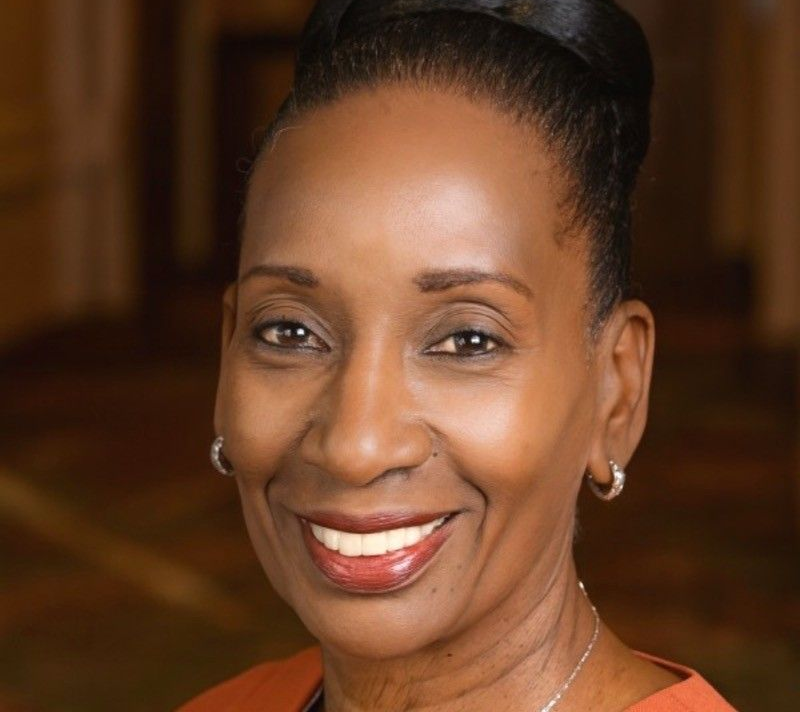
Beverly Kuykendall helps businesses navigate complex markets, build stronger partnerships and turn ambitious ideas into workable plans. Some business leaders see a procurement requirement and stop at the obstacle. Beverly Kuykendall asks what it would take to move forward. Over decades in federal acquisition and commercialization, Kuykendall has helped organizations work through the demands of government contracting while keeping their commercial goals in view. Her career has included executive roles as President of Government Business, Chief Strategy Officer and President. In each, she has worked at the point where strategy must become something a team can actually execute. Today, Kuykendall advises mission-driven organizations and manufacturers seeking new routes to growth. For companies pursuing domestic production, that may mean beginning with practical steps such as packaging, labeling, kitting, light assembly or fulfillment. These staged solutions can help a manufacturer establish domestic capacity and enter a market while building toward a larger goal. She also helps manufacturers develop reseller and distribution programs with clear standards for selecting partners, onboarding them and measuring performance. The aim is to grow revenue while protecting the relationships and reputation a business has worked hard to build. Kuykendall’s strength lies in making complicated systems understandable and actionable. She sees how procurement rules, supply chains and commercial partnerships fit together—and where an organization can make its next move with confidence. For entrepreneurs and business leaders trying to enter a demanding market, that perspective matters. A complex path can still be a path. Kuykendall’s work helps organizations find it, prepare for it and take the next step.

By Kim Anthony
•
September 24, 2026
Felecia Fisher-Shamu has built a women-owned furniture manufacturing business whose work reaches from Los Angeles hotels to destinations around the world. Before Felecia Fisher-Shamu’s work appeared in luxury hotels and major entertainment venues, she was building relationships with the people who knew those spaces best: hotel engineering and housekeeping teams in Santa Monica and Los Angeles. She listened, learned what the work demanded and built a business around delivering it well. Today, Fisher-Shamu is CEO and co-founder of Vitality Casegoods, Restorations, and Furniture Manufacturing, Inc. In a competitive industry where women business owners have had to establish their place, she has earned a reputation for custom furnishings, furniture design and restoration. She has done it with creative vision, perseverance and a team of skilled craftspeople. Vitality’s work has reached properties in the United States, Anguilla, Saudi Arabia and Canada. Fisher-Shamu has contributed to sustainable projects with Google and ARIA in Las Vegas, as well as furnishings for major hotels and entertainment spaces. Her team’s work has also supported events associated with the NAACP Image Awards, the Daytime Emmys and Oscar celebrations, including a VIP gala honoring Black Panther costume designer Ruth E. Carter. Her passion for restoration gives the business another dimension. Vitality helped restore antiques from Paris for Lumière at the refurbished Fairmont Century Plaza in Los Angeles. Earlier in her career, Fisher-Shamu restored antiques for the Four Seasons Hotel Beverly Hills. She values the artistry in preserving a piece’s character as much as the skill required to create something new. Even during the pandemic, when the hospitality industry faced extraordinary disruption, Vitality continued to win work. Projects included SoFi Stadium’s Owners Club, Loews St. Louis Live! hotel and Circa Resort & Casino in Las Vegas. Fisher-Shamu’s story celebrates what a woman-owned business can build through talent, trusted relationships and the determination to keep going. Her furnishings may be found in celebrated spaces, but the deeper achievement is the enterprise she and her team have crafted along the way.

By Kim Anthony
•
September 24, 2026
Richard “Rick” Benbow III connects employers, educators and communities to help more people reach the careers they imagine for themselves. For Rick Benbow, access to education means more than opening a door. People also need a path through it: a way to gain skills, connect with employers and see where their effort can take them. As a vice president at Western Governors University , Benbow builds partnerships that connect education with workforce needs. His market expansion work has contributed to more than 45% enrollment growth, and he has secured $5 million in grant funding to address education gaps. Among his accomplishments is a California High Road Training Partnership grant aimed at expanding workforce opportunities. Benbow’s work has also included developing Nevada’s first software development apprenticeship program and building relationships with companies such as Apple and Google. Across these efforts, he focuses on a practical question: What would make this opportunity reachable for someone who has the talent, but needs a clear route forward? He describes his leadership style as part builder, part connector and part coach. That approach has shaped his work with employers, agencies and educational institutions, as well as outreach efforts designed to speak to the communities they hope to serve. His experience also includes a strategic plan that strengthened UCLA’s engagement across greater Los Angeles. Benbow measures growth by more than enrollment or the size of a partnership. The greater promise is what happens when those connections lead to skills, credentials and careers. By bringing the right people and resources together, he is helping make that promise possible for more learners. Connect with Richard (Rick) Benbow, III >> here .
By Kim Anthony
•
September 24, 2026
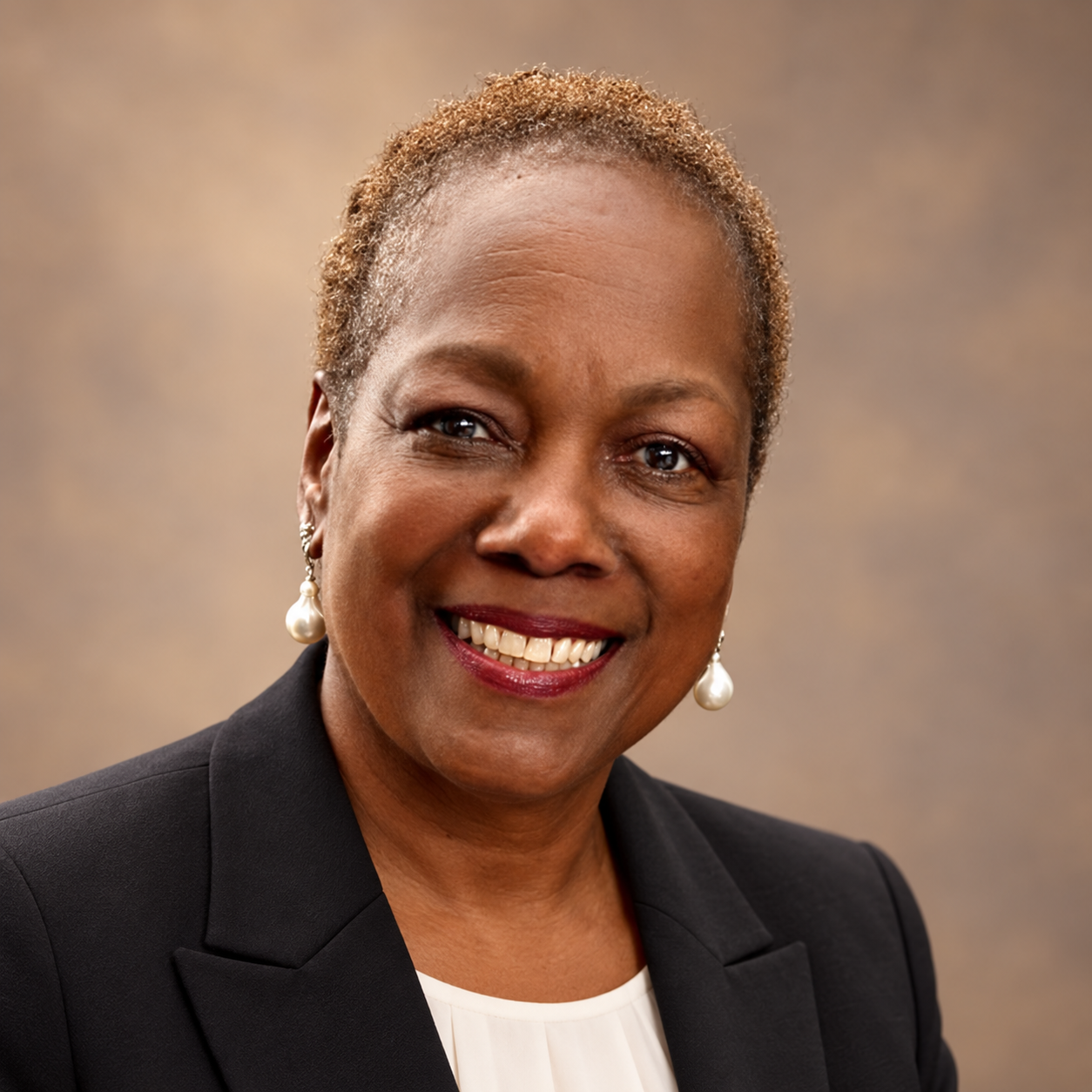
Robin Morgan Billups brings experience in commercial real estate finance and supplier diversity to her work helping entrepreneurs pursue contracts and build stronger businesses. Robin Morgan Billups has spent her career working on both sides of a question many entrepreneurs face: How does a business become ready for a major opportunity? She began in commercial real estate construction finance, sourcing, underwriting and managing conventional and affordable housing investments for institutions including Bank of America and U.S. Bank. As a commercial real estate construction relationship manager at U.S. Bank, she averaged more than $150 million in annual loan production. Billups later created U.S. Bank’s national supplier diversity program across a 24-state footprint. She built a program focused on education, assessment, compliance and certification for businesses seeking a place in corporate supply chains. After leaving the bank, she joined the Women’s Business Enterprise National Council as a national business development manager, working with corporate members across the public and private sectors. Today, she brings those experiences together through The Billups Group. Her firm works with organizations on supplier inclusion and procurement strategies while helping entrepreneurs assess their capabilities, strengthen client relationships and prepare to pursue contracts. Billups also serves as a speaker, panelist and facilitator on business strategy, women-owned and diverse business enterprises, and opportunities connected to housing, infrastructure and transit development. An alumna of the USC Marshall School of Business’s Minority Program in Real Estate Development and Finance, Billups understands both the financial demands of large projects and the preparation smaller firms need to participate in them. Her goal is to help businesses recognize their marketable strengths, meet procurement requirements and turn a promising connection into lasting growth. For more information connect with Robin Billups here.
By Kim Anthony
•
September 23, 2026
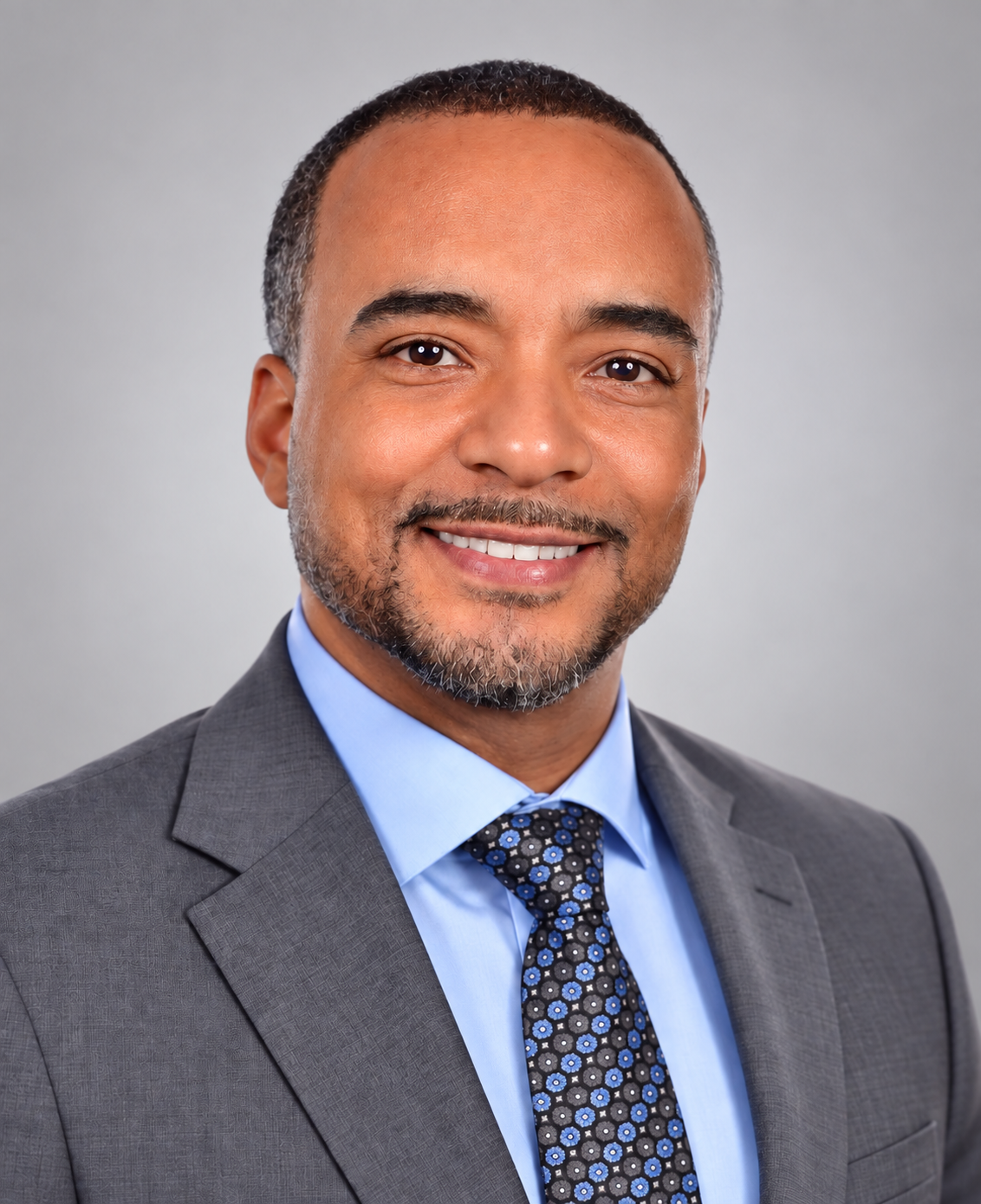
Through JCL Consulting Group and the Crenshaw Chamber of Commerce, JC Lacy works to strengthen the relationships between public agencies, local businesses and the communities they serve. A public project can affect a neighborhood long before construction begins. JC Lacy’s work starts with the conversations that help agencies understand who will be affected, what matters to them and how to keep them informed. As principal of JCL Consulting Group, which he launched in 2019, Lacy develops community engagement strategies for public projects across California. His firm helps government agencies build relationships with local organizations and businesses through outreach planning, training and direct community support. Its work also includes digital marketing and storytelling. Lacy brought more than a decade of Los Angeles public-sector experience to the venture. He previously served as a commissioner with the Los Angeles Housing Department, a transportation deputy in the Los Angeles Mayor’s Office and a business liaison at LA Metro. Across those roles, his focus was connecting agencies with the people and businesses their work touched. Today, he also volunteers as president of the Crenshaw Chamber of Commerce, a 93-year-old nonprofit focused on economic development for small business owners. The role keeps him close to entrepreneurs whose perspectives can be overlooked in decisions about the places where they operate. A Stanford University graduate with a degree in psychology and marketing, Lacy was also named to the Pac-10 All-Academic Team. His work now draws on that mix of communication, business engagement and cultural competency to help communities participate in projects that shape their future. For more information visit: JCL Consulting Group and Crenshaw Chamber of Commerce.
By Kim Anthony
•
September 23, 2026
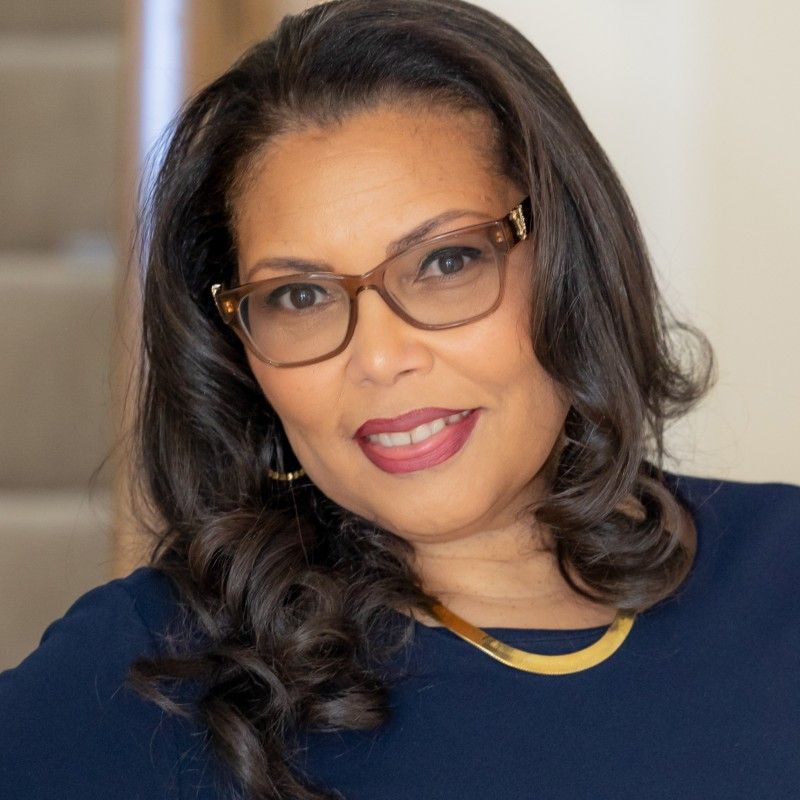
Sarah R. Harris brings more than two decades of service to the Black Business Association and a career spent helping organizations connect with their communities. Sarah R. Harris knows how to keep building when circumstances change. In 1999, she created SAVE THE DATE, an eight-page quarterly newsletter featuring community events and news. It grew into a full-color magazine in 2005. When economic pressures and changes in publishing led her to close it in 2010, Harris kept her creative ambitions alive. She returned to publishing in 2019 with the launch of Suite Life SoCal, which she leads as publisher-in-chief. Today, Harris serves as chairwoman and CEO of the Black Business Association (BBA), California’s oldest active ethnic business support organization. She has worked with the BBA for more than 20 years, providing services alongside its previous leader, Mr. Cooper. That history gives her a close understanding of the organization as she helps guide its next chapter. Harris is also president of SuiteEvents, a Southern California creative services and marketing company. Through that work, she has served more than 100 organizations, elected officials, government agencies and small businesses, including the City of Inglewood, USC Marshall School of Business, Charles R. Drew University of Medicine and Science, and the YWCA of Greater Los Angeles. Her contributions have earned recognition for both her publishing and community work. In 2008, then-Senator Mark Ridley-Thomas selected her business as the 26th District’s Small Business of the Year. At the BBA, Harris brings together her experience as an entrepreneur and her long-standing commitment to the organization. She is looking ahead to what the association can become while honoring the leadership and relationships that brought it this far. For more information visit: Black Business Association

By Kim Anthony
•
September 23, 2026
For entrepreneurs who built a livelihood out of necessity, taking care of everyone else can come naturally. Covered California Executive Director Jessica Altman wants them to know that help finding health coverage is within reach—and that their own well-being deserves attention. They get up early to prepare for customers and stay up late answering messages, finishing orders or wondering how to make the numbers work. Some started a business because they saw an opportunity. Others started because they needed one. At Urban Business Journal, we call these resourceful, determined people everyday unicorns. They are good at making a way. They may be less practiced at making time for themselves. A checkup can wait until after the busy season. A nagging concern can wait until the next invoice is paid. Rest can wait until everything on the list is done—which, for an entrepreneur, may feel like never. That is one reason a conversation about health coverage matters. For people who work for themselves or take on gig work, there may be no employer handing them a benefits packet. Some assume insurance is out of reach. Others simply have not had the time to find out. Jessica Altman, executive director of Covered California , has a message for them: “We see you.” Asked about self-employed workers and entrepreneurs without job-based coverage during an interviews at Covered California’s Connected to Coverage Summit at Charles Drew University, Altman told Urban Business Journal, “We see the struggles to get by, but also that it is so challenging to choose to work in a way that you don’t get the stability of benefits.” Covered California is the state’s health insurance marketplace. People who work for themselves can use it to explore individual health plans and find out whether they qualify for financial help. The same application checks eligibility for Medi-Cal. If you are self-employed and have no W-2 employees, an individual plan may be the right place to start; owning a business does not, by itself, disqualify you from assistance. “We are incredibly proud to be the place that people who are self-employed or in the gig economy can come and still get financial support to bring health insurance within reach, hopefully for them,” Altman said. Make room for the person behind the business Health coverage is a practical step. So is using it. Entrepreneurs can become so accustomed to solving problems for other people that they brush past their own. They show up for a customer despite a poor night’s sleep. They reschedule a medical visit to take a meeting. They promise themselves they will slow down when business settles. Caring for yourself need not begin with a dramatic overhaul. It can begin by scheduling an appointment you have put off, asking a health care professional which screenings are appropriate for you, or making enough room in the day to eat and rest. The Centers for Disease Control and Prevention recommends staying current on appropriate checkups, screenings and vaccinations, and says adults should get at least seven hours of sleep a day. For an everyday unicorn, this is part of being about the business: taking the best possible care of the person the business depends on. How Covered California works Visit CoveredCA.com to compare plans and apply. If you would rather talk it through, call (800) 300-1506 or use the website to find free local enrollment help. Altman said Covered California also offers online help and works with enrollment partners in communities across the state. “They speak your language if your first language is not English,” she said of local enrollment partners. “And it is their job to provide free and confidential assistance in navigating health insurance, period.” You do not have to know in advance whether you qualify for a Covered California plan or Medi-Cal. One application checks both. If a marketplace plan is an option, you can compare its monthly premium—the amount you pay to keep coverage—with other costs, such as deductibles and copays, before choosing. If your income changes from month to month, make your best estimate of your household income for the year you want coverage. That estimate helps determine financial assistance. Update it when your circumstances change so your assistance reflects what you are actually earning. The cost of coverage and the help available will depend on your household and the plan you choose. Mark these dates Open enrollment for 2027 coverage begins November 1, 2026, and ends January 31, 2027. To have a health plan start on January 1, 2027, enroll by December 31, 2026. Enrolling in January generally means coverage begins February 1. Certain life changes, including losing other health coverage, may allow someone to enroll outside that window. Medi-Cal enrollment is available year-round. Altman acknowledged that finding health coverage does not make every challenge disappear. “It’s never going to be perfect,” she said. But she wants independent workers to know that helping them access care is part of Covered California’s mission. If you have been waiting for the business to give you permission to take care of yourself, consider this your reminder: check your coverage options, make the appointment, and give your health a place on the schedule. You have spent a great deal of energy building a way forward . You deserve care along the way. For more information visit: CoveredCa.com

By Kim Anthony
•
September 23, 2026
LOS ANGELES — A meal out can do more than introduce you to a new favorite dish. It can introduce you to the entrepreneur behind it. Los Angeles Black Restaurant Week runs through Sunday, September 27 , spotlighting Black-owned culinary businesses across the region. The organizer’s LA directory includes restaurants and cafés in Los Angeles, Inglewood, Hawthorne, Lakewood and Northridge. Among the listings are Obet & Del’s Coffee, All Chill, The Toast and Jam, and College Boy Cheesesteaks. The campaign offers an easy starting point for people who want to spend locally with more intention. Browse the directory, choose a business you have not tried, and bring a friend. If you enjoy the experience, tell someone about it. A recommendation, a return visit or a catering inquiry can help turn a one-time discovery into an ongoing customer relationship. For business owners and community organizations, there is another opportunity: consider these culinary entrepreneurs when planning meetings, staff events and celebrations. The most meaningful support can continue well beyond Restaurant Week. Find a business in the Los Angeles Black Restaurant Week directory . Photo credit: Instagram | Joyce Soul and Sea DTLA

By Kim Anthony
•
September 23, 2026
LOS ANGELES — Nearly 28,000 organizations employ 335,000 people in Los Angeles County. The findings give nonprofit leaders new evidence to bring to funding, policy and partnership conversations.Nonprofits are often measured by the people they serve. A new report makes the case for measuring them as a major part of the local economy, too. The Center for Nonprofit Management and the Los Angeles County Economic Development Corporation examined 27,916 active nonprofits in Los Angeles County. Together, the organizations employ approximately 335,000 people. If counted as a single sector, nonprofits would rank as the county’s fourth-largest employer. The report estimates that nonprofit activity generates $185.6 billion in total economic output. It also supports an estimated 1.16 million jobs when direct employment, supplier activity and other economic effects are counted together. Those are different measures: 335,000 people work directly for nonprofits, while the larger figure includes jobs supported throughout the county economy. The findings matter especially for smaller organizations. Ninety percent of the nonprofits studied have annual income below $1 million. Their combined economic reach is substantial, even though many operate with limited budgets and staff. For nonprofit leaders, the report offers language for conversations with funders and elected officials: an investment in their work can support both community services and local employment. For businesses, it is a reminder that nonprofits purchase goods and services and can be valuable customers and partners. The opportunity: Read the report, identify the figures most relevant to your organization, and pair them with your own results. The countywide numbers tell a powerful story; your organization’s jobs, spending and community outcomes can show where you fit within it. Access the LAEDC report here Photo: Los Angeles County nonprofits employ approximately 335,000 people and help drive economic activity across the region.
Launches We Love

By Kim Anthony
•
July 15, 2026
Artificial intelligence is no longer just for Silicon Valley. It's helping Inland Empire entrepreneurs write marketing campaigns, create social media content, answer customer emails, build business plans, design presentations, and save hours of administrative work every week. And local business advisors are making sure small businesses don't get left behind. The Orange County Inland Empire Small Business Development Center (OCIE SBDC) has begun integrating artificial intelligence into its training, workshops, and one-on-one advising, introducing entrepreneurs to practical tools like ChatGPT, Microsoft Copilot, Canva AI, and other business automation platforms. The goal isn't to replace people—it's to help entrepreneurs spend less time on repetitive tasks and more time growing their businesses. For many small business owners, time is their most limited resource. A restaurant owner may spend hours writing social media posts. A consultant may struggle to create proposals. A nonprofit leader may spend an entire day drafting a grant application. AI-powered tools can help produce a strong first draft in minutes, giving business owners more time to focus on serving customers and generating revenue. Across the Inland Empire, entrepreneurs are already putting AI to work in practical ways: Drafting marketing emails and newsletters Creating social media graphics and videos Writing product descriptions for online stores Summarizing meeting notes Developing business plans and pitch decks Conducting market research Responding to customer inquiries Translating content into multiple languages For many microbusinesses with one or two employees, AI functions like an extra member of the team—helping owners accomplish work that previously required hiring outside specialists. That can be especially meaningful for startups and entrepreneurs by necessity, where every dollar and every hour matter. Opportunity Through Technology While headlines often focus on whether artificial intelligence will replace jobs, local business advisors see another story unfolding. For small businesses, AI is becoming an equalizer. It allows entrepreneurs to produce professional-quality marketing, organize information more efficiently, improve customer service, and make data-informed decisions without needing a large staff or expensive software. Like the arrival of email, websites, or social media, AI represents another shift in how business gets done. Those who learn to use it thoughtfully may find themselves better equipped to compete in an increasingly digital economy. For the Inland Empire's small businesses, the question is no longer whether artificial intelligence is coming. It's already here. The opportunity is learning how to use it wisely.
By Kim Anthony
•
February 6, 2026
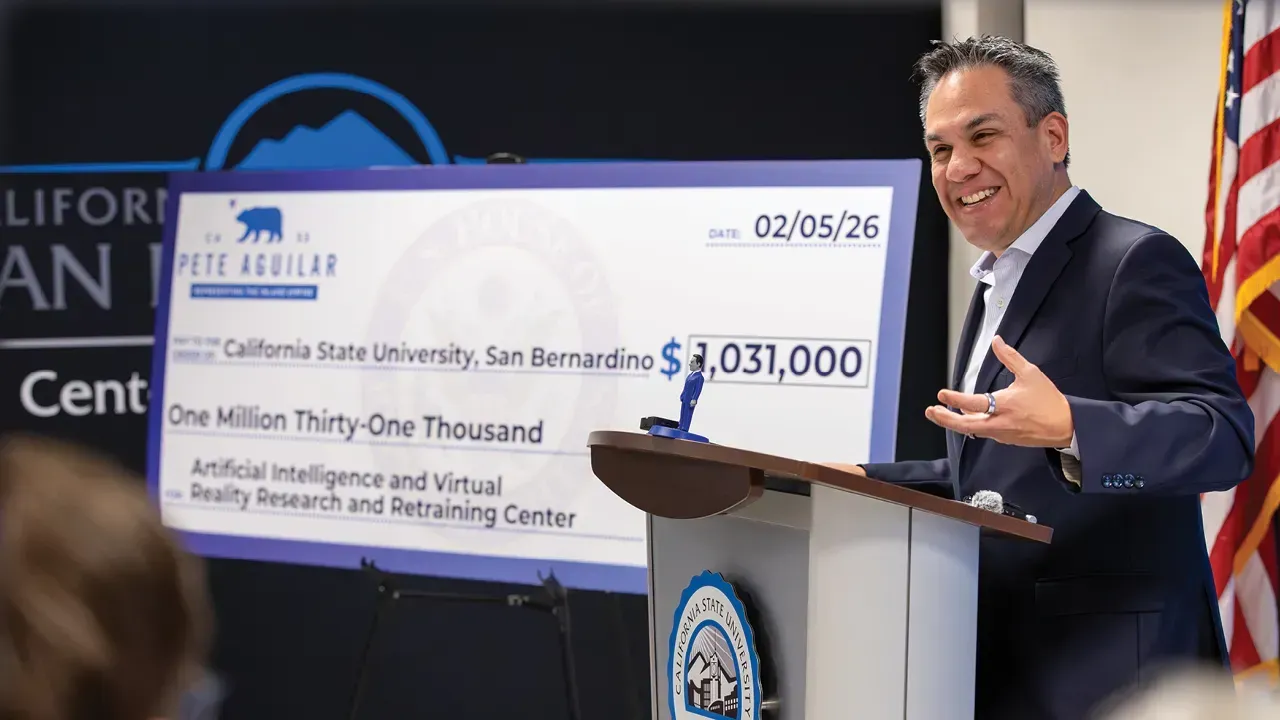
(SAN BERNARDINO, CA) Rep. Pete Aguilar (CA-33) announced $1 million in federal grant funding for California State University, San Bernardino (CSUSB), in collaboration with the University of California, Riverside (UCR), to expand and enhance artificial intelligence (AI) education and workforce development in the Inland Empire. The U.S. National Science Foundation’s Hispanic-Serving Institutions (HSI) Program will provide a $600,000 grant to CSUSB and a $400,000 grant to UCR. “As the artificial intelligence workforce rapidly expands and evolves, it is essential that students in the Inland Empire have the skills and knowledge they need to have successful careers in this growing field,” said Rep. Pete Aguilar . “This grant funding for CSUSB and UCR is an important investment in our students’ futures, our region’s workforce and our community’s economic development.” “With this NSF grant, we will launch new academic programs in AI, establish a community-focused AI Help Desk, and expand research opportunities for all students in the Inland Empire,” said Dr. Yunfei Hou, Executive Director of the Leonard Transportation Center and Professor of Computer Science and Engineering at CSUSB. “These efforts will provide students with hands-on experience solving real-world challenges, strengthen the region’s workforce, and create flexible pathways into AI careers.” “We at UCR are delighted to partner with CSUSB on this grant and provide students in the Inland Empire with a world-class education in AI,” said Dr. Evangelos Papalexakis, Professor and Ross Family Chair in Computer Science at the Computer Science and Engineering Department at UCR . “This grant aligns with our ongoing efforts on interdisciplinary AI education and research and the campus-wide RAISE@UCR AI institute, which encompasses around 100 faculty from different departments and colleges and where AI serves as the connective tissue across disciplines.” The funding comes as part of the U.S. National Science Foundation’s (NSF) Hispanic-Serving Institutions: Enriching Learning, Programs, and Student Experiences (HSI:ELPSE) grant program. The project, Promoting Regional Opportunities for Practical and Engaged Learning in AI (PROPEL AI), will allow CSUSB to develop new AI-focused academic programs, create an AI Help Desk that supports local businesses and organizations and build inclusive pathways into AI careers for first-generation and underrepresented students. Additionally, the grant funding will allow UCR graduate students to mentor CSUSB undergraduate students on innovative AI research and joint research projects.

By Kim Anthony
•
January 2, 2026
San Bernardino, CA — Artificial intelligence is no longer a distant concept reserved for Silicon Valley or global tech firms. On Saturday, February 21, 2026 , the Kinetic AI Hub will officially open its doors at The BBOP Center, offering entrepreneurs, small businesses, nonprofits, and workforce professionals direct access to practical, real-world AI education and application. Located at 599 N. Arrowhead Avenue, the Kinetic AI Hub was created to help individuals and organizations move beyond awareness and into action—learning how to responsibly deploy emerging technologies to drive growth, improve efficiency, and expand opportunity. The grand opening event begins at 11:00 a.m. and marks a significant milestone for the Inland Empire, a region increasingly focused on innovation, workforce readiness, and economic mobility. From Curiosity to Capability Unlike traditional technology centers that focus heavily on theory, the Kinetic AI Hub emphasizes hands-on training and applied project development. Participants learn how to integrate artificial intelligence into real business and organizational workflows—turning curiosity into practical capability. The Hub serves a wide range of audiences, including: Entrepreneurs and small business owners seeking to streamline operations Nonprofit organizations looking to enhance service delivery and impact Creatives and social entrepreneurs exploring AI-powered tool Workforce professionals preparing for the evolving demands of the job market By centering accessibility and ethical deployment, the Hub aims to ensure that AI adoption benefits the broader community—not just large institutions. Leadership with Regional Impact The Kinetic AI Hub is supported by a leadership and advisory team with deep roots in education, technology, entrepreneurship, and workforce development. Leadership includes Dr. Kim Carter-Tillman, President and CEO, and Donnell Layne , Chief AI Architect of the Kinetic AI Hub, who leads the technical vision and applied learning strategy. Invited guest speakers include: Don Harjo Daves-Rougeaux , Senior Advisor of Generative AI to the State Chancellor Diana Z. Rodriguez , Chancellor, San Bernardino Community College District Ciera Foster , Creative and Social Entrepreneur X. Eyee , CEO of Malo Santo Timothy Lyons , Chief Technology and Operating Officer of the BBOP Center Dr. Dale Marsden , Founder and Chief Visionary of Tomorrow’s Talent Together, The Kinetic AI Hub will execute a multidisciplinary approach designed to connect education, industry, and community needs. A New Resource for the Inland Empire As artificial intelligence reshapes nearly every sector of the economy, the Kinetic AI Hub positions our communities as a participant—rather than an observer—in the AI era. The Hub is designed as a regional resource, supporting collaboration across small businesses, nonprofits, educational institutions, and the creative economy. Organizers say the goal is not simply to teach technology, but to empower the creative solutions needed to advance the economy. Grand Opening Details The Kinetic AI Hub Grand Opening will take place on Saturday, February 21, 2026 , at 11:00 a.m. , at 599 N. Arrowhead Avenue, San Bernardino, CA 92401. Additional information is available by phone at (909) 530-2267.
Breaking News
By Kim Anthony
•
September 25, 2026
Beginning January 1, 2027, California sales and use tax will generally apply to prewritten software delivered electronically or accessed remotely, including many Software-as-a-Service subscriptions. CALIFORNIA — If your business sells software, provides access to an online platform or pays for software subscriptions, a tax change belongs on your 2027 planning list. Under Senate Bill 122 , signed into law June 29, 2026, California is expanding the sales and use tax definition of tangible personal property to include certain digital products and associated copyright or patent interests. That means retail sales of covered products in California—and covered products purchased from a retailer for storage, use or other consumption in California—may be taxable beginning January 1, 2027 . The change generally affects sellers of prewritten software, SaaS providers, businesses that license or provide remote access to prewritten software, and the customers who buy those products. What counts as a digital product? For this law, a digital product is prewritten computer software delivered on physical storage media, transferred electronically or accessed remotely. Prewritten software is software held for general or repeated sale or lease. It can qualify even if it was originally developed for a particular customer or for a company’s own use. A combination of two or more prewritten programs can also qualify. What is outside this definition? The law does not classify every digital purchase as a taxable digital product. The following are excluded from its digital product definition: Digital assets, such as cryptocurrency Digital audio works, such as music, spoken recordings and ringtones Digital audiovisual works, such as movies and videos with sound Digital books, or eBooks Digital infrastructure, such as cloud platforms customers use to create, deploy or run their own software applications Digital video game products Digital visual works, such as computer-generated artwork The law also provides exemptions for custom computer software , digital products representing a service other than SaaS, digital products transferred with reproduction and distribution rights, and digital products purchased solely for use outside California. Businesses should review the details of a transaction before treating it as excluded or exempt. A $5 million rule for certain large purchases In some transactions, responsibility for paying the tax can shift from the retailer to the purchaser. The rule concerns a retailer’s aggregate gross receipts from digital products sold to the same purchaser that are transferred electronically or accessed remotely. For 2027 , the threshold is more than $5 million in that calendar year . Beginning January 1, 2028 , the test looks at whether those receipts exceeded $5 million in the current or preceding calendar year. When the rule applies, the purchaser may need a Use Tax Direct Payment Permit and may have to report and pay the tax directly to the California Department of Tax and Fee Administration (CDTFA). Location matters for local taxes For digital products transferred electronically or accessed remotely, the place of sale for local and district tax reporting is generally the customer’s address. The place of use is where the person accessing the product is located. That distinction matters when a company’s billing address and its software users are in different places. CDTFA explains the rules in its Tax Guide for Retailers and Purchasers of Digital Products . What sellers need to do California digital product sellers that are not already registered with CDTFA may need to obtain a seller’s permit , file sales and use tax returns, and report and pay tax on taxable retail sales. Out-of-state sellers that are engaged in business in California under Revenue and Taxation Code section 6203 may need a Certificate of Registration—Use Tax . They would collect and report use tax on covered sales to California consumers and pay it to CDTFA. Registration is available through CDTFA Online Services . The UBJ takeaway: Software sellers can use the months before January 2027 to review their products, customer locations, invoicing and registration needs. Buyers can review their software agreements and ask vendors how the new tax will appear on invoices. For the definitions, exemptions and reporting rules, start with CDTFA’s digital products tax guide
By Kim Anthony
•
September 24, 2026
Beverly Kuykendall helps businesses navigate complex markets, build stronger partnerships and turn ambitious ideas into workable plans. Some business leaders see a procurement requirement and stop at the obstacle. Beverly Kuykendall asks what it would take to move forward. Over decades in federal acquisition and commercialization, Kuykendall has helped organizations work through the demands of government contracting while keeping their commercial goals in view. Her career has included executive roles as President of Government Business, Chief Strategy Officer and President. In each, she has worked at the point where strategy must become something a team can actually execute. Today, Kuykendall advises mission-driven organizations and manufacturers seeking new routes to growth. For companies pursuing domestic production, that may mean beginning with practical steps such as packaging, labeling, kitting, light assembly or fulfillment. These staged solutions can help a manufacturer establish domestic capacity and enter a market while building toward a larger goal. She also helps manufacturers develop reseller and distribution programs with clear standards for selecting partners, onboarding them and measuring performance. The aim is to grow revenue while protecting the relationships and reputation a business has worked hard to build. Kuykendall’s strength lies in making complicated systems understandable and actionable. She sees how procurement rules, supply chains and commercial partnerships fit together—and where an organization can make its next move with confidence. For entrepreneurs and business leaders trying to enter a demanding market, that perspective matters. A complex path can still be a path. Kuykendall’s work helps organizations find it, prepare for it and take the next step.
By Kim Anthony
•
September 24, 2026
Felecia Fisher-Shamu has built a women-owned furniture manufacturing business whose work reaches from Los Angeles hotels to destinations around the world. Before Felecia Fisher-Shamu’s work appeared in luxury hotels and major entertainment venues, she was building relationships with the people who knew those spaces best: hotel engineering and housekeeping teams in Santa Monica and Los Angeles. She listened, learned what the work demanded and built a business around delivering it well. Today, Fisher-Shamu is CEO and co-founder of Vitality Casegoods, Restorations, and Furniture Manufacturing, Inc. In a competitive industry where women business owners have had to establish their place, she has earned a reputation for custom furnishings, furniture design and restoration. She has done it with creative vision, perseverance and a team of skilled craftspeople. Vitality’s work has reached properties in the United States, Anguilla, Saudi Arabia and Canada. Fisher-Shamu has contributed to sustainable projects with Google and ARIA in Las Vegas, as well as furnishings for major hotels and entertainment spaces. Her team’s work has also supported events associated with the NAACP Image Awards, the Daytime Emmys and Oscar celebrations, including a VIP gala honoring Black Panther costume designer Ruth E. Carter. Her passion for restoration gives the business another dimension. Vitality helped restore antiques from Paris for Lumière at the refurbished Fairmont Century Plaza in Los Angeles. Earlier in her career, Fisher-Shamu restored antiques for the Four Seasons Hotel Beverly Hills. She values the artistry in preserving a piece’s character as much as the skill required to create something new. Even during the pandemic, when the hospitality industry faced extraordinary disruption, Vitality continued to win work. Projects included SoFi Stadium’s Owners Club, Loews St. Louis Live! hotel and Circa Resort & Casino in Las Vegas. Fisher-Shamu’s story celebrates what a woman-owned business can build through talent, trusted relationships and the determination to keep going. Her furnishings may be found in celebrated spaces, but the deeper achievement is the enterprise she and her team have crafted along the way.
By Kim Anthony
•
September 24, 2026
Richard “Rick” Benbow III connects employers, educators and communities to help more people reach the careers they imagine for themselves. For Rick Benbow, access to education means more than opening a door. People also need a path through it: a way to gain skills, connect with employers and see where their effort can take them. As a vice president at Western Governors University , Benbow builds partnerships that connect education with workforce needs. His market expansion work has contributed to more than 45% enrollment growth, and he has secured $5 million in grant funding to address education gaps. Among his accomplishments is a California High Road Training Partnership grant aimed at expanding workforce opportunities. Benbow’s work has also included developing Nevada’s first software development apprenticeship program and building relationships with companies such as Apple and Google. Across these efforts, he focuses on a practical question: What would make this opportunity reachable for someone who has the talent, but needs a clear route forward? He describes his leadership style as part builder, part connector and part coach. That approach has shaped his work with employers, agencies and educational institutions, as well as outreach efforts designed to speak to the communities they hope to serve. His experience also includes a strategic plan that strengthened UCLA’s engagement across greater Los Angeles. Benbow measures growth by more than enrollment or the size of a partnership. The greater promise is what happens when those connections lead to skills, credentials and careers. By bringing the right people and resources together, he is helping make that promise possible for more learners. Connect with Richard (Rick) Benbow, III >> here .
By Kim Anthony
•
September 24, 2026
Robin Morgan Billups brings experience in commercial real estate finance and supplier diversity to her work helping entrepreneurs pursue contracts and build stronger businesses. Robin Morgan Billups has spent her career working on both sides of a question many entrepreneurs face: How does a business become ready for a major opportunity? She began in commercial real estate construction finance, sourcing, underwriting and managing conventional and affordable housing investments for institutions including Bank of America and U.S. Bank. As a commercial real estate construction relationship manager at U.S. Bank, she averaged more than $150 million in annual loan production. Billups later created U.S. Bank’s national supplier diversity program across a 24-state footprint. She built a program focused on education, assessment, compliance and certification for businesses seeking a place in corporate supply chains. After leaving the bank, she joined the Women’s Business Enterprise National Council as a national business development manager, working with corporate members across the public and private sectors. Today, she brings those experiences together through The Billups Group. Her firm works with organizations on supplier inclusion and procurement strategies while helping entrepreneurs assess their capabilities, strengthen client relationships and prepare to pursue contracts. Billups also serves as a speaker, panelist and facilitator on business strategy, women-owned and diverse business enterprises, and opportunities connected to housing, infrastructure and transit development. An alumna of the USC Marshall School of Business’s Minority Program in Real Estate Development and Finance, Billups understands both the financial demands of large projects and the preparation smaller firms need to participate in them. Her goal is to help businesses recognize their marketable strengths, meet procurement requirements and turn a promising connection into lasting growth. For more information connect with Robin Billups here.
Trending Stories

By Kim Anthony
•
July 15, 2026
The 21st Century ROAD to Housing Act, signed into law on July 11, 2026, represents one of the most comprehensive federal housing policy packages enacted in decades—and could create significant opportunities for Inland Empire communities, developers, small businesses and residents seeking greater economic mobility. According to an analysis by the Bipartisan Policy Center, the final legislation brings together provisions from more than 60 previously introduced bills, including 36 measures with bipartisan sponsorship. The package addresses nearly every part of the housing system, from development approvals and affordable housing financing to manufactured housing, homeownership, community banking and neighborhood revitalization. After months of negotiations, the Senate approved the legislation by an 85–5 vote on June 22, followed by a 358–32 vote in the House on June 23. What’s in the Final Deal? The final law combines major elements of earlier House and Senate housing proposals while preserving several negotiated compromises. Among the most notable provisions, the law: Raises the cap on the Rental Assistance Demonstration program by 100,000 units. Authorizes the Community Development Block Grant Disaster Recovery program for three years. Creates a new Moving to Work program cohort focused on economic opportunity and pathways to independence. Retains nine community banking provisions initially included in the House legislation. Restricts certain large institutional investors from purchasing additional single-family homes while maintaining an exception for properties constructed or acquired specifically for rental use. Establishes a HUD renter-outreach resource for tenants living in properties owned by institutional investors. For the Inland Empire , however, some of the law’s most consequential provisions are those designed to accelerate housing construction, unlock underused property and expand access to capital. More Resources for Cities That Build Housing The law establishes a $200 million annual Innovation Fund for local governments and tribal communities that demonstrate measurable increases in housing production. Communities could qualify by adopting policies such as streamlined permitting, density bonuses, zoning reforms and faster development approvals. The program is authorized for seven years. For Inland Empire cities confronting rapid population growth and housing affordability challenges, the fund could provide additional resources to modernize permitting systems, increase planning capacity and move housing projects through the approval process more efficiently. That could also create opportunities for local planning firms, architects, engineers, environmental consultants, technology providers and businesses that help cities improve development processes. New Support for Planning and Infrastructure The legislation creates a competitive HUD grant program to help cities, counties, tribal governments and regional planning agencies undertake housing-related planning and community development. Eligible activities include updating regulatory processes, increasing inspection capacity and coordinating housing development with transportation planning. This provision may be especially important for the Inland Empire , where housing growth must be coordinated with transportation, employment centers, schools, utilities and other infrastructure. It could help communities better connect new housing to major job corridors, transit systems and commercial districts—while generating contracting opportunities for local consultants, construction professionals and professional-service firms. Converting Vacant Buildings Into Housing The law also creates the Revitalizing Empty Structures Into Desirable Environments Act, or RESIDE Act, pilot program. The program will help local governments convert vacant commercial and industrial buildings into affordable housing, with priority given to economically distressed communities and Opportunity Zones. Across the Inland Empire, this could support the redevelopment of underused office buildings, aging shopping centers, vacant retail properties and obsolete commercial spaces. Adaptive-reuse projects can create opportunities for: General contractors and subcontractors Architects and engineers Environmental and remediation firms Interior designers Property managers Building-material suppliers Landscapers and maintenance providers Neighborhood-serving retailers and restaurants Transforming vacant buildings can also place new residents closer to existing businesses, helping restore foot traffic and consumer spending in older commercial corridors. More Affordable Housing Financing The law makes affordable housing construction an eligible use of Community Development Block Grant funding. It also increases the amount banks may invest in affordable housing and community development projects through public-welfare investments—from 15% to 20% of their capital and surplus. These changes could expand the financing available for affordable and mixed-income developments, particularly when federal resources are combined with state, county, city and private investment. For the Inland Empire development community , this could make it easier to assemble complex financing packages and move projects that might otherwise remain financially infeasible. It may also strengthen opportunities for community development financial institutions, minority depository institutions, mission-oriented lenders and nonprofit housing organizations. Faster Environmental Reviews Several sections of the law are intended to reduce duplication and delay in federal environmental reviews. The legislation expands categorical exclusions for certain federally supported housing activities, gives HUD greater authority to delegate environmental responsibilities to state and local governments, and streamlines reviews for smaller projects, infill developments and certain affordable housing activities. The reforms do not eliminate local or state development requirements. However, they may reduce the time and administrative expense associated with overlapping federal reviews. For developers, shorter approval timelines can lower carrying costs and reduce uncertainty. For small contractors and professional firms, projects that move forward more quickly can translate into more consistent work and faster payment cycles. Pre-Approved Housing Designs Through the Accelerating Home Building Act, local governments and tribes may receive grants to adopt pre-reviewed housing designs for accessory dwelling units, duplexes, townhomes and other forms of affordable housing. This could help Inland Empire cities standardize commonly requested designs and shorten review times for property owners and small-scale developers. Pre-approved plans could make it easier for: Homeowners to add accessory dwelling units. Small builders to complete infill projects. Families to create multigenerational housing. Property owners to generate rental income. Communities to add housing without relying solely on large developments. For entrepreneurs, this provision may create a new market for firms specializing in ADUs , prefabricated construction, permitting assistance, financing and property management. Expanded Opportunities in Manufactured and Modular Housing The legislation includes an entire title focused on manufactured and modular housing. It eliminates the permanent-chassis requirement for certain manufactured homes, increases FHA-insured manufactured housing loan limits, supports the preservation of manufactured housing communities and directs HUD to identify barriers facing modular housing developers. Manufactured and modular construction could be particularly valuable in the Inland Empire because it may allow housing to be produced more efficiently and at a lower cost than some traditional construction methods. The reforms may generate opportunities for local manufacturers, transportation companies, site-preparation contractors, installers, utility providers and businesses supporting manufactured-home communities. Greater Access to Small Mortgages The law authorizes an FHA pilot program designed to expand access to mortgages of less than $100,000. It also requires federal regulators to examine how fees and mortgage-originator compensation practices affect the availability of smaller loans. Although many Inland Empire homes cost substantially more than $100,000, small-dollar mortgages may still support the purchase or rehabilitation of manufactured homes, homes in certain rural areas and lower-cost properties requiring repairs. Greater access to responsible mortgage financing could help more renters begin building equity while creating additional business for community lenders, mortgage professionals, real estate agents, appraisers and housing counselors. Appraisal Workforce Opportunities The legislation reforms appraisal licensing and training, adds flexibility for trainee appraisers a nd authorizes grants supporting appraisal workforce development. This could create new career pathways for Inland Empire residents while helping address appraisal shortages that can delay real estate transactions. For workforce-development organizations, colleges and professional associations, the provision presents an opportunity to introduce more residents— including people from communities historically underrepresented in the profession —to appraisal careers. Strengthening Community Banks and Local Lending The final law retains nine provisions focused on community banks and credit unions. Among other changes, the legislation supports the formation of new community banks and minority depository institutions, establishes greater regulatory flexibility for smaller financial institutions and formalizes a mentor-protégé program pairing large banks with smaller, rural and minority-owned institutions. A stronger community banking sector could benefit Inland Empire entrepreneurs who often struggle to obtain financing from larger institutions. Locally focused banks and credit unions may be more willing to evaluate borrowers based on community relationships, business potential and local market knowledge. That could expand access to mortgages, construction financing, small-business loans and community development capital. Limiting Institutional Purchases of Single-Family Homes The Homes Are for People, Not Corporations provision restricts large institutional investors that own at least 350 single-family homes from purchasing additional newly available single-family homes. The law includes exceptions, including for institutional investors purchasing or constructing homes specifically intended for the rental market. The provision may give individual buyers a better opportunity to compete for certain homes, although its ultimate effect will depend on implementation and the availability of housing in each local market. For Inland Empire families, improved access to homeownership can support long-term wealth creation. Homeownership also generates economic activity for real estate professionals, lenders, insurance agents, contractors, furniture stores and home-service businesses. Why this Housing Bill is Important to Inland Empire Business and Communities Housing policy is also economic-development policy. When employees cannot afford to live near their jobs, businesses face longer commutes, higher turnover and greater difficulty recruiting workers. Housing instability can also affect attendance, productivity and household spending. Increasing the supply of housing at a variety of price points could help Inland Empire employers attract and retain workers while allowing more residents to live closer to employment opportunities. New housing development also supports a broad network of small and microbusinesses—not only large developers and construction companies. Projects require surveyors, electricians, plumbers, roofers, painters, landscapers, security firms, caterers, marketing companies, accountants, attorneys, insurance brokers and dozens of other local vendors. Once residents move in, they create demand for childcare, healthcare, retail, restaurants, transportation and personal services. An Economic-Mobility Opportunity For working families, housing is one of the most important foundations of economic mobility. Stable and affordable housing makes it easier for people to remain employed, pursue education, start businesses and accumulate savings. Homeownership can provide an opportunity to build intergenerational wealth, while affordable rental housing can give families the financial breathing room needed to invest in their futures. The new law also supports whole-home repair programs that can provide grants or forgivable loans to homeowners and landlords for property repairs and modifications. For lower-income homeowners and older adults, these resources could help preserve existing homes, prevent displacement and support aging in place. They could also generate work for local repair contractors and skilled tradespeople. What the Inland Empire Should Watch Next The passage of the legislation is only the beginning. Federal agencies must now develop regulations, launch grant programs and establish implementation timelines. Inland Empire cities, counties, housing authorities, developers, lenders and community organizations should begin identifying projects and partnerships that could benefit. Local leaders should pay particular attention to: HUD planning and housing-production grants The $200 million annual Innovation Fund Commercial-to-residential conversion funding Whole-home repair pilot programs Manufactured and modular housing reforms Community bank and minority depository institution initiatives Appraisal workforce-development grants Changes to CDBG and HOME funding Pre-approved housing design programs The most successful Inland Empire communities will likely be those that begin preparing early—building partnerships, identifying underused properties, reviewing local permitting systems and creating pipelines of projects that can compete for new federal resources . The Bottom Line The 21st Century ROAD to Housing Act will not solve the region’s housing affordability crisis on its own. Land costs, interest rates, construction expenses, infrastructure needs and local approval processes will remain significant challenges. However, the legislation provides new tools that could help Inland Empire communities build and preserve more housing, revitalize underused properties, strengthen local financial institutions and create pathways to homeownership. For the region’s business and development community, the law represents more than a housing package. It is a potential pipeline of investment, contracts, jobs, entrepreneurship and neighborhood renewal. Source: Bipartisan Policy Center, “Inside the Deal: What’s in the Final 21st Century ROAD to Housing Act,” updated to reflect the law enacted July 11, 2026.
By Kim Anthony
•
April 3, 2026
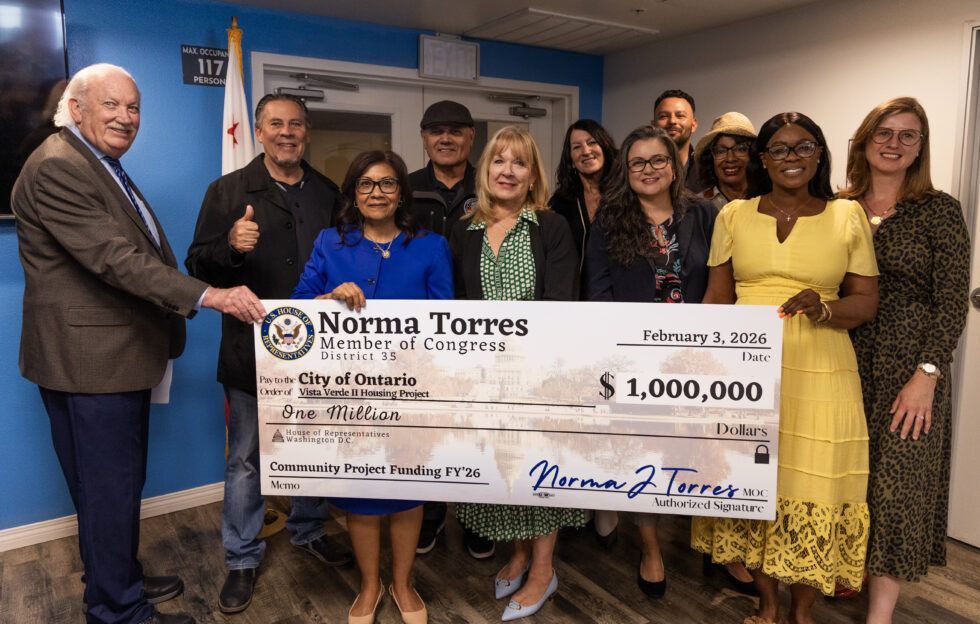
ONTARIO, Calif. – National CORE and the City of Ontario have secured a $1 million federal Community Project Grant to support a new affordable housing community that will deliver safer streets, reliable transit and opportunity for families along the Holt Boulevard corridor in downtown Ontario. The funding, provided by U.S. Rep. Norma Torres, was celebrated March 31 at National CORE’s Vista Verde community, located a block from the new property. Torres said affordable housing is the top request from her constituents and thanked city leaders and National CORE for working closely together to ensure those needs are being met. “Every family deserves a safe, affordable place to call home, and that starts with investments like this one,” she said. “I hear every day from constituents struggling with the cost of housing, which is why partnerships with organizations like National CORE are so critical. They do not just make promises, they deliver. I’m proud to have helped support this new community and the families who will call it home.” The new community, known as Vista Verde II, will provide 144 one-, two- and three-bedroom apartment homes for households earning 30% to 60% of the area median income (AMI) at 905 E. Holt Blvd., along with a raft of neighborhood improvements: Grove Avenue Trail Connector, a protected Class I bicycle and pedestrian path linking neighborhoods from Fourth Street to Holt Boulevard. ADA-accessible walking paths through Grove Memorial Park, creating safe pedestrian routes where none previously existed. Sidewalk repairs, ADA upgrades, traffic calming and crosswalk enhancements along Allyn Avenue, supporting Safe Routes to School and neighborhood safety. 10 new bus shelters along key transit corridors. Expansion of Sunday service on Omnitrans’ sbX Green Line, providing seven-day-a-week access to transit. Leaders from National CORE and the City of Ontario said Vista Verde II reflects the power of strong public-private partnerships to revitalize neighborhoods and address California’s critical affordable housing shortfall. “This project is part of a transformation of this community – transit, parks, sidewalks and, of course, vitally needed housing. It’s going to be beautiful. It’s been critical to have this partnership with the city and with Congresswoman Torres, who long has been a champion for our residents,” National CORE President Michael Ruane said. Ontario Mayor Paul Leon thanked Torres for helping bring needed workforce housing to Ontario. “Norma is always there for things like this, things that benefit the community. I care about people who care about people and that’s who we have here,” he said. Tuesday’s event also included remarks from Ellen, a single mom who moved to Vista Verde in 2024 after struggling with medical bills and rising rents that hit $2,000 a month for her one-bedroom home. “I worked for Walgreens for 20 years, but then I got sick – I got breast cancer. The rent just kept increasing and the bills just kept piling up. It got to the point where I had to pack myself up and go stay with my mom.” “I was so stressed going through my treatment, and I just kept looking for a new home the whole time. Then, I got the call. I couldn’t believe it. I just love, love, love it here,” she added. Ellen said she loves the activities provided at the community by the Hope through Housing Foundation, created by National CORE. Her 12-year-old son participates in summer programs and she has taken two free job training classes through CORE Academy. “I’m very thankful to National CORE and I pray to God that you continue to help families. You don’t know how much this means to us. If I didn’t have National CORE, I don’t know where I’d be right now,” she said. National CORE Chairman Jeff Burum said individuals like Ellen are why the organization is committed to building new affordable housing. “This is what we do every day. We believe in community, we believe in families,” he said. © National CORE

By Kim Anthony
•
March 3, 2026
San Bernardino County will receive nearly $7 million in federal funding to support a series of infrastructure and public safety improvements across the region. The funding, secured by members of the county’s congressional delegation, will help pay for upgrades to roads, animal shelters, and wastewater and sewer infrastructure, according to a statement posted on the county’s website. Behavioral health programs and the San Bernardino County Sheriff’s Department search and rescue team will also receive a portion of the funding. “This funding demonstrates what is possible when local priorities are elevated to the federal level,” said Supervisor Dawn Rowe, chair of the Board of Supervisors, in the statement. “We appreciate our congressional delegation securing federal resources that will have long-term benefits for San Bernardino County.” The funding is classified as Community Project Funding, a practice formerly known as earmarking. Community Project Funding allows members of Congress to secure federal dollars for projects in their districts, provided the requests are submitted during the annual federal appropriations process, according to the statement. How this Benefits the Inland Empire Economy Nearly $7 million in federal infrastructure investment represents more than facility upgrades — it strengthens the economic foundation of one of California’s fastest-growing regions. Modern sewer systems, improved transportation infrastructure, airport upgrades and enhanced emergency response capabilities make communities more attractive for business development, tourism and long-term residential growth. Infrastructure improvements also help local governments meet environmental standards and reduce risks that can slow development. For historically under-resourced communities such as Bloomington, Trona and parts of the High Desert, these investments can also help close infrastructure gaps that have limited economic expansion. In a region where population growth continues to outpace infrastructure investment, targeted federal funding like this helps ensure the Inland Empire remains competitive for new businesses, housing development and job creation.
more stories
By Kim Anthony
•
September 25, 2026
Beginning January 1, 2027, California sales and use tax will generally apply to prewritten software delivered electronically or accessed remotely, including many Software-as-a-Service subscriptions. CALIFORNIA — If your business sells software, provides access to an online platform or pays for software subscriptions, a tax change belongs on your 2027 planning list. Under Senate Bill 122 , signed into law June 29, 2026, California is expanding the sales and use tax definition of tangible personal property to include certain digital products and associated copyright or patent interests. That means retail sales of covered products in California—and covered products purchased from a retailer for storage, use or other consumption in California—may be taxable beginning January 1, 2027 . The change generally affects sellers of prewritten software, SaaS providers, businesses that license or provide remote access to prewritten software, and the customers who buy those products. What counts as a digital product? For this law, a digital product is prewritten computer software delivered on physical storage media, transferred electronically or accessed remotely. Prewritten software is software held for general or repeated sale or lease. It can qualify even if it was originally developed for a particular customer or for a company’s own use. A combination of two or more prewritten programs can also qualify. What is outside this definition? The law does not classify every digital purchase as a taxable digital product. The following are excluded from its digital product definition: Digital assets, such as cryptocurrency Digital audio works, such as music, spoken recordings and ringtones Digital audiovisual works, such as movies and videos with sound Digital books, or eBooks Digital infrastructure, such as cloud platforms customers use to create, deploy or run their own software applications Digital video game products Digital visual works, such as computer-generated artwork The law also provides exemptions for custom computer software , digital products representing a service other than SaaS, digital products transferred with reproduction and distribution rights, and digital products purchased solely for use outside California. Businesses should review the details of a transaction before treating it as excluded or exempt. A $5 million rule for certain large purchases In some transactions, responsibility for paying the tax can shift from the retailer to the purchaser. The rule concerns a retailer’s aggregate gross receipts from digital products sold to the same purchaser that are transferred electronically or accessed remotely. For 2027 , the threshold is more than $5 million in that calendar year . Beginning January 1, 2028 , the test looks at whether those receipts exceeded $5 million in the current or preceding calendar year. When the rule applies, the purchaser may need a Use Tax Direct Payment Permit and may have to report and pay the tax directly to the California Department of Tax and Fee Administration (CDTFA). Location matters for local taxes For digital products transferred electronically or accessed remotely, the place of sale for local and district tax reporting is generally the customer’s address. The place of use is where the person accessing the product is located. That distinction matters when a company’s billing address and its software users are in different places. CDTFA explains the rules in its Tax Guide for Retailers and Purchasers of Digital Products . What sellers need to do California digital product sellers that are not already registered with CDTFA may need to obtain a seller’s permit , file sales and use tax returns, and report and pay tax on taxable retail sales. Out-of-state sellers that are engaged in business in California under Revenue and Taxation Code section 6203 may need a Certificate of Registration—Use Tax . They would collect and report use tax on covered sales to California consumers and pay it to CDTFA. Registration is available through CDTFA Online Services . The UBJ takeaway: Software sellers can use the months before January 2027 to review their products, customer locations, invoicing and registration needs. Buyers can review their software agreements and ask vendors how the new tax will appear on invoices. For the definitions, exemptions and reporting rules, start with CDTFA’s digital products tax guide
By Kim Anthony
•
September 24, 2026
Beverly Kuykendall helps businesses navigate complex markets, build stronger partnerships and turn ambitious ideas into workable plans. Some business leaders see a procurement requirement and stop at the obstacle. Beverly Kuykendall asks what it would take to move forward. Over decades in federal acquisition and commercialization, Kuykendall has helped organizations work through the demands of government contracting while keeping their commercial goals in view. Her career has included executive roles as President of Government Business, Chief Strategy Officer and President. In each, she has worked at the point where strategy must become something a team can actually execute. Today, Kuykendall advises mission-driven organizations and manufacturers seeking new routes to growth. For companies pursuing domestic production, that may mean beginning with practical steps such as packaging, labeling, kitting, light assembly or fulfillment. These staged solutions can help a manufacturer establish domestic capacity and enter a market while building toward a larger goal. She also helps manufacturers develop reseller and distribution programs with clear standards for selecting partners, onboarding them and measuring performance. The aim is to grow revenue while protecting the relationships and reputation a business has worked hard to build. Kuykendall’s strength lies in making complicated systems understandable and actionable. She sees how procurement rules, supply chains and commercial partnerships fit together—and where an organization can make its next move with confidence. For entrepreneurs and business leaders trying to enter a demanding market, that perspective matters. A complex path can still be a path. Kuykendall’s work helps organizations find it, prepare for it and take the next step.
By Kim Anthony
•
September 24, 2026
Felecia Fisher-Shamu has built a women-owned furniture manufacturing business whose work reaches from Los Angeles hotels to destinations around the world. Before Felecia Fisher-Shamu’s work appeared in luxury hotels and major entertainment venues, she was building relationships with the people who knew those spaces best: hotel engineering and housekeeping teams in Santa Monica and Los Angeles. She listened, learned what the work demanded and built a business around delivering it well. Today, Fisher-Shamu is CEO and co-founder of Vitality Casegoods, Restorations, and Furniture Manufacturing, Inc. In a competitive industry where women business owners have had to establish their place, she has earned a reputation for custom furnishings, furniture design and restoration. She has done it with creative vision, perseverance and a team of skilled craftspeople. Vitality’s work has reached properties in the United States, Anguilla, Saudi Arabia and Canada. Fisher-Shamu has contributed to sustainable projects with Google and ARIA in Las Vegas, as well as furnishings for major hotels and entertainment spaces. Her team’s work has also supported events associated with the NAACP Image Awards, the Daytime Emmys and Oscar celebrations, including a VIP gala honoring Black Panther costume designer Ruth E. Carter. Her passion for restoration gives the business another dimension. Vitality helped restore antiques from Paris for Lumière at the refurbished Fairmont Century Plaza in Los Angeles. Earlier in her career, Fisher-Shamu restored antiques for the Four Seasons Hotel Beverly Hills. She values the artistry in preserving a piece’s character as much as the skill required to create something new. Even during the pandemic, when the hospitality industry faced extraordinary disruption, Vitality continued to win work. Projects included SoFi Stadium’s Owners Club, Loews St. Louis Live! hotel and Circa Resort & Casino in Las Vegas. Fisher-Shamu’s story celebrates what a woman-owned business can build through talent, trusted relationships and the determination to keep going. Her furnishings may be found in celebrated spaces, but the deeper achievement is the enterprise she and her team have crafted along the way.
By Kim Anthony
•
September 24, 2026
Richard “Rick” Benbow III connects employers, educators and communities to help more people reach the careers they imagine for themselves. For Rick Benbow, access to education means more than opening a door. People also need a path through it: a way to gain skills, connect with employers and see where their effort can take them. As a vice president at Western Governors University , Benbow builds partnerships that connect education with workforce needs. His market expansion work has contributed to more than 45% enrollment growth, and he has secured $5 million in grant funding to address education gaps. Among his accomplishments is a California High Road Training Partnership grant aimed at expanding workforce opportunities. Benbow’s work has also included developing Nevada’s first software development apprenticeship program and building relationships with companies such as Apple and Google. Across these efforts, he focuses on a practical question: What would make this opportunity reachable for someone who has the talent, but needs a clear route forward? He describes his leadership style as part builder, part connector and part coach. That approach has shaped his work with employers, agencies and educational institutions, as well as outreach efforts designed to speak to the communities they hope to serve. His experience also includes a strategic plan that strengthened UCLA’s engagement across greater Los Angeles. Benbow measures growth by more than enrollment or the size of a partnership. The greater promise is what happens when those connections lead to skills, credentials and careers. By bringing the right people and resources together, he is helping make that promise possible for more learners. Connect with Richard (Rick) Benbow, III >> here .
By Kim Anthony
•
September 24, 2026
Robin Morgan Billups brings experience in commercial real estate finance and supplier diversity to her work helping entrepreneurs pursue contracts and build stronger businesses. Robin Morgan Billups has spent her career working on both sides of a question many entrepreneurs face: How does a business become ready for a major opportunity? She began in commercial real estate construction finance, sourcing, underwriting and managing conventional and affordable housing investments for institutions including Bank of America and U.S. Bank. As a commercial real estate construction relationship manager at U.S. Bank, she averaged more than $150 million in annual loan production. Billups later created U.S. Bank’s national supplier diversity program across a 24-state footprint. She built a program focused on education, assessment, compliance and certification for businesses seeking a place in corporate supply chains. After leaving the bank, she joined the Women’s Business Enterprise National Council as a national business development manager, working with corporate members across the public and private sectors. Today, she brings those experiences together through The Billups Group. Her firm works with organizations on supplier inclusion and procurement strategies while helping entrepreneurs assess their capabilities, strengthen client relationships and prepare to pursue contracts. Billups also serves as a speaker, panelist and facilitator on business strategy, women-owned and diverse business enterprises, and opportunities connected to housing, infrastructure and transit development. An alumna of the USC Marshall School of Business’s Minority Program in Real Estate Development and Finance, Billups understands both the financial demands of large projects and the preparation smaller firms need to participate in them. Her goal is to help businesses recognize their marketable strengths, meet procurement requirements and turn a promising connection into lasting growth. For more information connect with Robin Billups here.
By Kim Anthony
•
September 23, 2026
Through JCL Consulting Group and the Crenshaw Chamber of Commerce, JC Lacy works to strengthen the relationships between public agencies, local businesses and the communities they serve. A public project can affect a neighborhood long before construction begins. JC Lacy’s work starts with the conversations that help agencies understand who will be affected, what matters to them and how to keep them informed. As principal of JCL Consulting Group, which he launched in 2019, Lacy develops community engagement strategies for public projects across California. His firm helps government agencies build relationships with local organizations and businesses through outreach planning, training and direct community support. Its work also includes digital marketing and storytelling. Lacy brought more than a decade of Los Angeles public-sector experience to the venture. He previously served as a commissioner with the Los Angeles Housing Department, a transportation deputy in the Los Angeles Mayor’s Office and a business liaison at LA Metro. Across those roles, his focus was connecting agencies with the people and businesses their work touched. Today, he also volunteers as president of the Crenshaw Chamber of Commerce, a 93-year-old nonprofit focused on economic development for small business owners. The role keeps him close to entrepreneurs whose perspectives can be overlooked in decisions about the places where they operate. A Stanford University graduate with a degree in psychology and marketing, Lacy was also named to the Pac-10 All-Academic Team. His work now draws on that mix of communication, business engagement and cultural competency to help communities participate in projects that shape their future. For more information visit: JCL Consulting Group and Crenshaw Chamber of Commerce.
By Kim Anthony
•
September 23, 2026
Sarah R. Harris brings more than two decades of service to the Black Business Association and a career spent helping organizations connect with their communities. Sarah R. Harris knows how to keep building when circumstances change. In 1999, she created SAVE THE DATE, an eight-page quarterly newsletter featuring community events and news. It grew into a full-color magazine in 2005. When economic pressures and changes in publishing led her to close it in 2010, Harris kept her creative ambitions alive. She returned to publishing in 2019 with the launch of Suite Life SoCal, which she leads as publisher-in-chief. Today, Harris serves as chairwoman and CEO of the Black Business Association (BBA), California’s oldest active ethnic business support organization. She has worked with the BBA for more than 20 years, providing services alongside its previous leader, Mr. Cooper. That history gives her a close understanding of the organization as she helps guide its next chapter. Harris is also president of SuiteEvents, a Southern California creative services and marketing company. Through that work, she has served more than 100 organizations, elected officials, government agencies and small businesses, including the City of Inglewood, USC Marshall School of Business, Charles R. Drew University of Medicine and Science, and the YWCA of Greater Los Angeles. Her contributions have earned recognition for both her publishing and community work. In 2008, then-Senator Mark Ridley-Thomas selected her business as the 26th District’s Small Business of the Year. At the BBA, Harris brings together her experience as an entrepreneur and her long-standing commitment to the organization. She is looking ahead to what the association can become while honoring the leadership and relationships that brought it this far. For more information visit: Black Business Association
By Kim Anthony
•
September 23, 2026
For entrepreneurs who built a livelihood out of necessity, taking care of everyone else can come naturally. Covered California Executive Director Jessica Altman wants them to know that help finding health coverage is within reach—and that their own well-being deserves attention. They get up early to prepare for customers and stay up late answering messages, finishing orders or wondering how to make the numbers work. Some started a business because they saw an opportunity. Others started because they needed one. At Urban Business Journal, we call these resourceful, determined people everyday unicorns. They are good at making a way. They may be less practiced at making time for themselves. A checkup can wait until after the busy season. A nagging concern can wait until the next invoice is paid. Rest can wait until everything on the list is done—which, for an entrepreneur, may feel like never. That is one reason a conversation about health coverage matters. For people who work for themselves or take on gig work, there may be no employer handing them a benefits packet. Some assume insurance is out of reach. Others simply have not had the time to find out. Jessica Altman, executive director of Covered California , has a message for them: “We see you.” Asked about self-employed workers and entrepreneurs without job-based coverage during an interviews at Covered California’s Connected to Coverage Summit at Charles Drew University, Altman told Urban Business Journal, “We see the struggles to get by, but also that it is so challenging to choose to work in a way that you don’t get the stability of benefits.” Covered California is the state’s health insurance marketplace. People who work for themselves can use it to explore individual health plans and find out whether they qualify for financial help. The same application checks eligibility for Medi-Cal. If you are self-employed and have no W-2 employees, an individual plan may be the right place to start; owning a business does not, by itself, disqualify you from assistance. “We are incredibly proud to be the place that people who are self-employed or in the gig economy can come and still get financial support to bring health insurance within reach, hopefully for them,” Altman said. Make room for the person behind the business Health coverage is a practical step. So is using it. Entrepreneurs can become so accustomed to solving problems for other people that they brush past their own. They show up for a customer despite a poor night’s sleep. They reschedule a medical visit to take a meeting. They promise themselves they will slow down when business settles. Caring for yourself need not begin with a dramatic overhaul. It can begin by scheduling an appointment you have put off, asking a health care professional which screenings are appropriate for you, or making enough room in the day to eat and rest. The Centers for Disease Control and Prevention recommends staying current on appropriate checkups, screenings and vaccinations, and says adults should get at least seven hours of sleep a day. For an everyday unicorn, this is part of being about the business: taking the best possible care of the person the business depends on. How Covered California works Visit CoveredCA.com to compare plans and apply. If you would rather talk it through, call (800) 300-1506 or use the website to find free local enrollment help. Altman said Covered California also offers online help and works with enrollment partners in communities across the state. “They speak your language if your first language is not English,” she said of local enrollment partners. “And it is their job to provide free and confidential assistance in navigating health insurance, period.” You do not have to know in advance whether you qualify for a Covered California plan or Medi-Cal. One application checks both. If a marketplace plan is an option, you can compare its monthly premium—the amount you pay to keep coverage—with other costs, such as deductibles and copays, before choosing. If your income changes from month to month, make your best estimate of your household income for the year you want coverage. That estimate helps determine financial assistance. Update it when your circumstances change so your assistance reflects what you are actually earning. The cost of coverage and the help available will depend on your household and the plan you choose. Mark these dates Open enrollment for 2027 coverage begins November 1, 2026, and ends January 31, 2027. To have a health plan start on January 1, 2027, enroll by December 31, 2026. Enrolling in January generally means coverage begins February 1. Certain life changes, including losing other health coverage, may allow someone to enroll outside that window. Medi-Cal enrollment is available year-round. Altman acknowledged that finding health coverage does not make every challenge disappear. “It’s never going to be perfect,” she said. But she wants independent workers to know that helping them access care is part of Covered California’s mission. If you have been waiting for the business to give you permission to take care of yourself, consider this your reminder: check your coverage options, make the appointment, and give your health a place on the schedule. You have spent a great deal of energy building a way forward . You deserve care along the way. For more information visit: CoveredCa.com
By Kim Anthony
•
September 23, 2026
LOS ANGELES — A meal out can do more than introduce you to a new favorite dish. It can introduce you to the entrepreneur behind it. Los Angeles Black Restaurant Week runs through Sunday, September 27 , spotlighting Black-owned culinary businesses across the region. The organizer’s LA directory includes restaurants and cafés in Los Angeles, Inglewood, Hawthorne, Lakewood and Northridge. Among the listings are Obet & Del’s Coffee, All Chill, The Toast and Jam, and College Boy Cheesesteaks. The campaign offers an easy starting point for people who want to spend locally with more intention. Browse the directory, choose a business you have not tried, and bring a friend. If you enjoy the experience, tell someone about it. A recommendation, a return visit or a catering inquiry can help turn a one-time discovery into an ongoing customer relationship. For business owners and community organizations, there is another opportunity: consider these culinary entrepreneurs when planning meetings, staff events and celebrations. The most meaningful support can continue well beyond Restaurant Week. Find a business in the Los Angeles Black Restaurant Week directory . Photo credit: Instagram | Joyce Soul and Sea DTLA
By Kim Anthony
•
September 23, 2026
LOS ANGELES — Nearly 28,000 organizations employ 335,000 people in Los Angeles County. The findings give nonprofit leaders new evidence to bring to funding, policy and partnership conversations.Nonprofits are often measured by the people they serve. A new report makes the case for measuring them as a major part of the local economy, too. The Center for Nonprofit Management and the Los Angeles County Economic Development Corporation examined 27,916 active nonprofits in Los Angeles County. Together, the organizations employ approximately 335,000 people. If counted as a single sector, nonprofits would rank as the county’s fourth-largest employer. The report estimates that nonprofit activity generates $185.6 billion in total economic output. It also supports an estimated 1.16 million jobs when direct employment, supplier activity and other economic effects are counted together. Those are different measures: 335,000 people work directly for nonprofits, while the larger figure includes jobs supported throughout the county economy. The findings matter especially for smaller organizations. Ninety percent of the nonprofits studied have annual income below $1 million. Their combined economic reach is substantial, even though many operate with limited budgets and staff. For nonprofit leaders, the report offers language for conversations with funders and elected officials: an investment in their work can support both community services and local employment. For businesses, it is a reminder that nonprofits purchase goods and services and can be valuable customers and partners. The opportunity: Read the report, identify the figures most relevant to your organization, and pair them with your own results. The countywide numbers tell a powerful story; your organization’s jobs, spending and community outcomes can show where you fit within it. Access the LAEDC report here Photo: Los Angeles County nonprofits employ approximately 335,000 people and help drive economic activity across the region.