UBJ Staff • September 5, 2026

From Enslavement to Empowerment: L.A. Moves to Rename Pershing Square in Honor of Biddy Mason’s Extraordinary Legacy
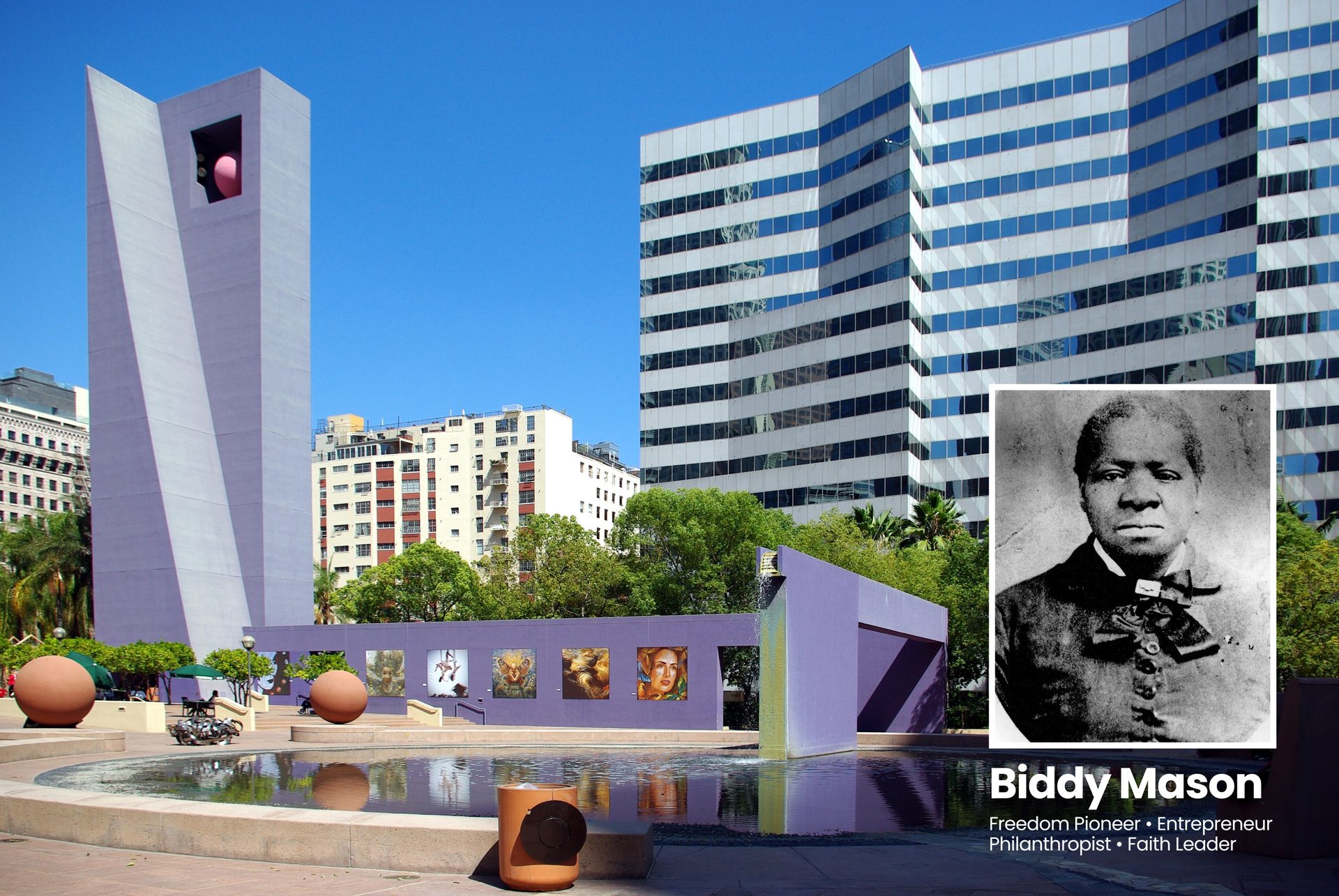
LOS ANGELES — Biddy Mason arrived in California without her freedom. But through extraordinary courage, determination and faith, she built a life that would help shape Los Angeles for generations.

Now, nearly 170 years after Mason won her freedom in a Los Angeles courtroom, the city is taking steps to ensure that her name and remarkable legacy are seen and remembered.

The Los Angeles City Council voted unanimously Friday to begin the process of renaming Pershing Square as Biddy Mason Park. The five-acre Downtown Los Angeles plaza, located between Olive and Hill streets near the Biltmore Hotel, would honor the formerly enslaved woman who became a successful landowner, philanthropist and founder of First African Methodist Episcopal Church of Los Angeles—one of the nation’s largest Black churches.

The Rev. Timothy E. Tyler of First AME Church was among those who urged the council to approve the change.


"In a world where histories are being erased and denied or negated, we believe that this act by the City Council will signal to the world that we in Los Angeles value those who have helped to build this city," Tyler said.

Council member Ysabel Jurado, whose district includes the park and who championed the proposal, said Mason’s story reflects the very heart of Los Angeles.

"When we talk about the Angeleno spirit, resilience, hope, and a refusal to let injustice define what's impossible for us, there may be no better example of that than Biddy Mason," Jurado said.
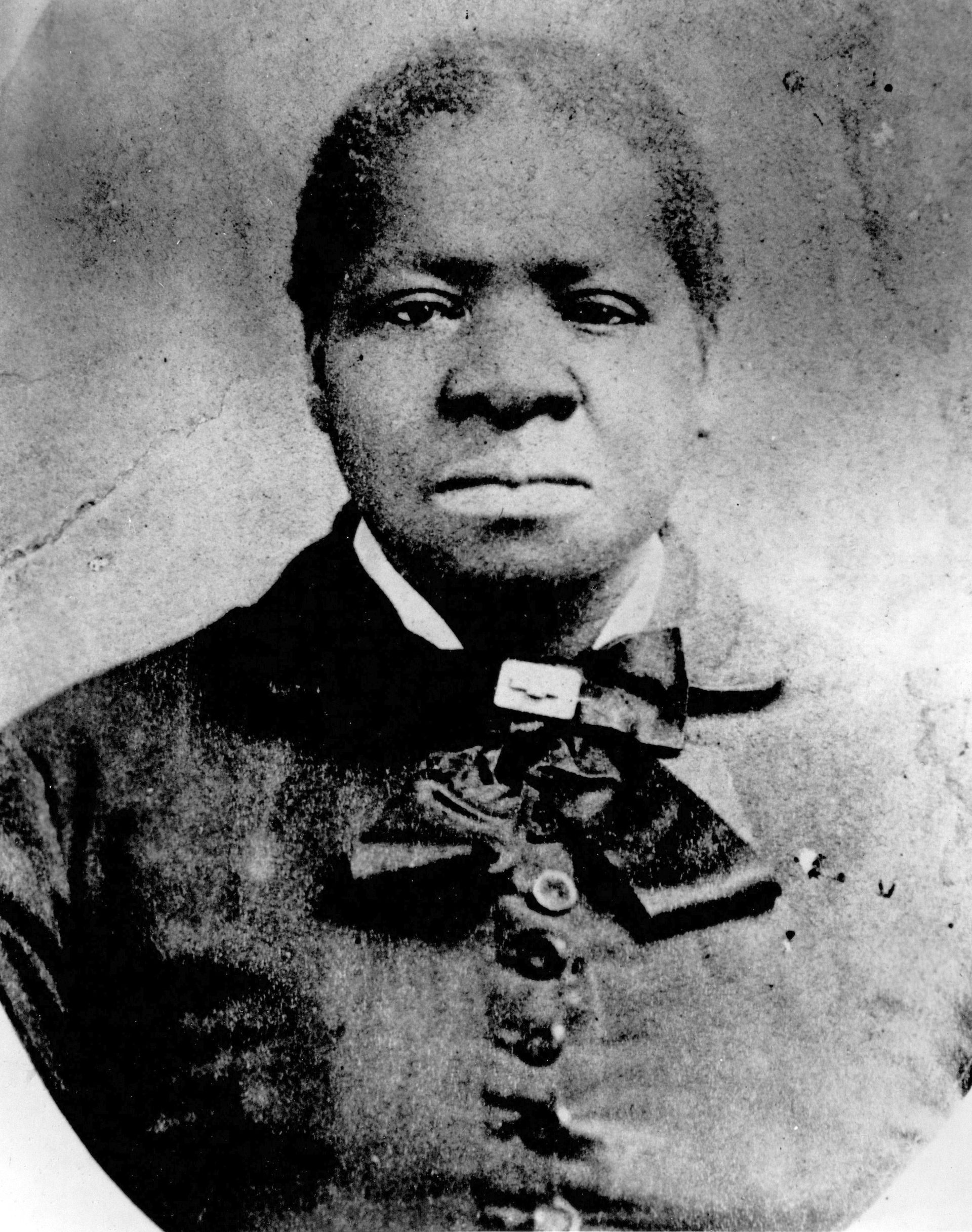
About Biddy Mason


Biddy Mason was born into slavery in Mississippi in 1818. After being forced to walk 1,700 miles west, she arrived in California, where slavery was illegal. In 1856, she courageously petitioned a Los Angeles court and won freedom for herself and members of her family. Mason later became a respected nurse, midwife, entrepreneur, philanthropist and one of Los Angeles’ earliest Black landowners.


She used her wealth to help people in need and co-founded First African Methodist Episcopal Church. Her remarkable journey from enslavement to ownership and community leadership made her a foundational figure in Los Angeles history and Black achievement.


A Legacy Born from Courage


Bridget “Biddy” Mason was born into slavery in Mississippi in 1818. Born without a surname, she was given the name Bridget, while “Biddy” became the name by which she was affectionately known.

She was sold multiple times and taken across state lines before reaching California. In 1848, Mason traveled west with Robert Smith, a Mississippi plantation owner who was relocating to establish a Mormon community in Utah.

Mason reportedly walked 1,700 miles alongside a 300-wagon caravan during the months-long journey. Along the way, she cared for Smith’s children as well as her own, cooked meals and herded cattle.

Smith later moved his household from Utah to San Bernardino, even though slavery was illegal in California. During that journey, Mason met free Black Californians who encouraged her and the other enslaved people traveling with her to challenge their legal status after reaching the state.

Mason found the courage to do exactly that.

In 1856, she petitioned a Los Angeles court and won freedom for herself and several members of her family. The case became one of the city’s earliest legal challenges to slavery and helped establish an important precedent for freedom in California.

But freedom was only the beginning of Biddy Mason’s story.

Building Wealth—and Sharing It


Mason worked as a nurse and midwife, carefully saving her earnings and eventually purchasing property in a rapidly growing Los Angeles. Over time, she became one of the city’s most successful early landowners.

Her accomplishments were extraordinary, particularly for a Black woman who had once been denied ownership of even her own life.

Yet Mason did not build wealth for herself alone. She became known for helping neighbors in need, feeding people experiencing hardship and using her resources to strengthen her community. She also helped establish First African Methodist Episcopal Church, creating a spiritual home and community institution that continues serving Los Angeles today.

Kevin Waite, a history professor at the University of Texas at Dallas who wrote a biography of Mason, said Black leaders such as Mason have too often been left at the margins of the city’s public history.

"Black civic leaders like Biddy Mason have long struggled for their due," said Waite, who grew up in Pasadena.

While researching Mason’s life, Waite discovered that she owned land between Olive and Grand streets, immediately next to Pershing Square. That direct connection, he said, makes the park a fitting place to honor a woman who invested her life, labor and resources in Los Angeles.

A Historic Park—and a Difficult Debate


Pershing Square is one of Los Angeles’ oldest parks. The land was dedicated for public use in 1866 as La Plaza Abaja. In 1918, following World War I, it was renamed Pershing Square in honor of Gen. John J. Pershing, who commanded U.S. forces in Europe.

Not everyone supports replacing the Pershing name.

Courtland Jindra, a former co-director of the California World War I Centennial Task Force, told the council that the plaza honors not only Pershing, but also the soldiers and sailors who served during the war.

"If we take away memorials for anyone, for the military, who's to say they're not going to take away the L.A. Memorial Coliseum?" Jindra asked.

Kim Cooper, who leads historical tours through her company Esotouric and considers herself a preservationist, also expressed concern about removing Pershing’s name.

"Pershing lived a life of integrity, as did Biddy Mason, and they're not in competition," Cooper said in an interview.


Mason already has a small park dedicated to her near Spring and Third streets. Built in 1989 on the site of her original homestead, the memorial honors her life but is tucked away and largely hidden from public view, according to Waite.


Cooper agreed that the existing memorial "needs some love," but believes it should receive better signs and greater visibility instead of renaming a World War I memorial.

She also criticized the city’s care of Pershing Square. On Friday morning, trash was scattered throughout the park, people appeared to be using drugs, and an unhoused person had set up a sleeping area on a park bench.

The effort to rename the square is not new. Then-Council member Kevin de León introduced a similar proposal in 2024, but it expired without a hearing as he faced political fallout from the 2022 Los Angeles City Hall racism scandal.


Friday’s vote does not immediately change the park’s name. It directs city officials to begin the formal renaming process.

For many supporters, however, the vote is already meaningful. It brings greater visibility to a woman whose courage, business leadership, generosity and faith are woven deeply into the history of Los Angeles.

Biddy Mason began her life without freedom, a last name or the right to own property. She ended it as a respected landowner, entrepreneur, philanthropist, church founder and community builder.

Renaming Pershing Square would do more than place her name on a park. It would place Biddy Mason where she has always belonged—at the center of the Los Angeles story.

Photo: The Angels 2010, CC BY-SA 3.0  | Wikipedia Commons
By Kim Anthony • September 25, 2026
Beginning January 1, 2027, California sales and use tax will generally apply to prewritten software delivered electronically or accessed remotely, including many Software-as-a-Service subscriptions. CALIFORNIA — If your business sells software, provides access to an online platform or pays for software subscriptions, a tax change belongs on your 2027 planning list. Under Senate Bill 122 , signed into law June 29, 2026, California is expanding the sales and use tax definition of tangible personal property to include certain digital products and associated copyright or patent interests. That means retail sales of covered products in California—and covered products purchased from a retailer for storage, use or other consumption in California—may be taxable beginning January 1, 2027 . The change generally affects sellers of prewritten software, SaaS providers, businesses that license or provide remote access to prewritten software, and the customers who buy those products. What counts as a digital product? For this law, a digital product is prewritten computer software delivered on physical storage media, transferred electronically or accessed remotely. Prewritten software is software held for general or repeated sale or lease. It can qualify even if it was originally developed for a particular customer or for a company’s own use. A combination of two or more prewritten programs can also qualify. What is outside this definition? The law does not classify every digital purchase as a taxable digital product. The following are excluded from its digital product definition: Digital assets, such as cryptocurrency Digital audio works, such as music, spoken recordings and ringtones Digital audiovisual works, such as movies and videos with sound Digital books, or eBooks Digital infrastructure, such as cloud platforms customers use to create, deploy or run their own software applications Digital video game products Digital visual works, such as computer-generated artwork The law also provides exemptions for custom computer software , digital products representing a service other than SaaS, digital products transferred with reproduction and distribution rights, and digital products purchased solely for use outside California. Businesses should review the details of a transaction before treating it as excluded or exempt. A $5 million rule for certain large purchases In some transactions, responsibility for paying the tax can shift from the retailer to the purchaser. The rule concerns a retailer’s aggregate gross receipts from digital products sold to the same purchaser that are transferred electronically or accessed remotely. For 2027 , the threshold is more than $5 million in that calendar year . Beginning January 1, 2028 , the test looks at whether those receipts exceeded $5 million in the current or preceding calendar year. When the rule applies, the purchaser may need a Use Tax Direct Payment Permit and may have to report and pay the tax directly to the California Department of Tax and Fee Administration (CDTFA). Location matters for local taxes For digital products transferred electronically or accessed remotely, the place of sale for local and district tax reporting is generally the customer’s address. The place of use is where the person accessing the product is located. That distinction matters when a company’s billing address and its software users are in different places. CDTFA explains the rules in its Tax Guide for Retailers and Purchasers of Digital Products . What sellers need to do California digital product sellers that are not already registered with CDTFA may need to obtain a seller’s permit , file sales and use tax returns, and report and pay tax on taxable retail sales. Out-of-state sellers that are engaged in business in California under Revenue and Taxation Code section 6203 may need a Certificate of Registration—Use Tax . They would collect and report use tax on covered sales to California consumers and pay it to CDTFA. Registration is available through CDTFA Online Services . The UBJ takeaway: Software sellers can use the months before January 2027 to review their products, customer locations, invoicing and registration needs. Buyers can review their software agreements and ask vendors how the new tax will appear on invoices. For the definitions, exemptions and reporting rules, start with CDTFA’s digital products tax guide
By Kim Anthony • September 24, 2026
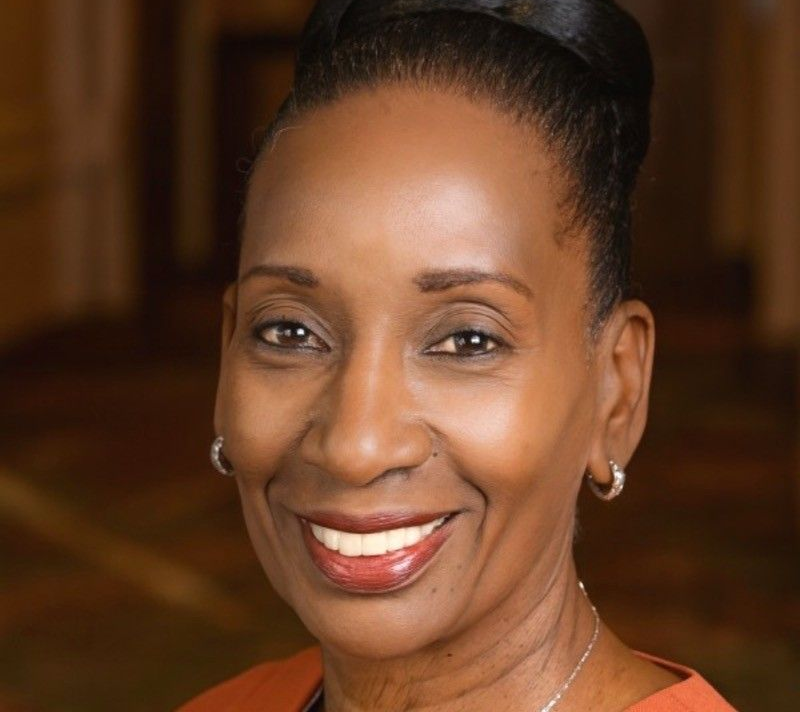
Beverly Kuykendall helps businesses navigate complex markets, build stronger partnerships and turn ambitious ideas into workable plans. Some business leaders see a procurement requirement and stop at the obstacle. Beverly Kuykendall asks what it would take to move forward. Over decades in federal acquisition and commercialization, Kuykendall has helped organizations work through the demands of government contracting while keeping their commercial goals in view. Her career has included executive roles as President of Government Business, Chief Strategy Officer and President. In each, she has worked at the point where strategy must become something a team can actually execute. Today, Kuykendall advises mission-driven organizations and manufacturers seeking new routes to growth. For companies pursuing domestic production, that may mean beginning with practical steps such as packaging, labeling, kitting, light assembly or fulfillment. These staged solutions can help a manufacturer establish domestic capacity and enter a market while building toward a larger goal. She also helps manufacturers develop reseller and distribution programs with clear standards for selecting partners, onboarding them and measuring performance. The aim is to grow revenue while protecting the relationships and reputation a business has worked hard to build. Kuykendall’s strength lies in making complicated systems understandable and actionable. She sees how procurement rules, supply chains and commercial partnerships fit together—and where an organization can make its next move with confidence. For entrepreneurs and business leaders trying to enter a demanding market, that perspective matters. A complex path can still be a path. Kuykendall’s work helps organizations find it, prepare for it and take the next step.
By Kim Anthony • September 24, 2026
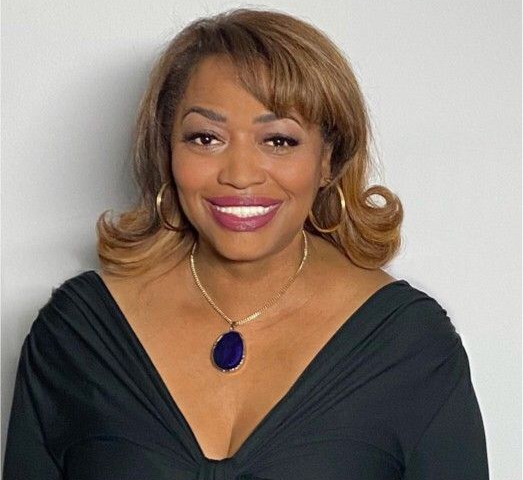
Felecia Fisher-Shamu has built a women-owned furniture manufacturing business whose work reaches from Los Angeles hotels to destinations around the world. Before Felecia Fisher-Shamu’s work appeared in luxury hotels and major entertainment venues, she was building relationships with the people who knew those spaces best: hotel engineering and housekeeping teams in Santa Monica and Los Angeles. She listened, learned what the work demanded and built a business around delivering it well. Today, Fisher-Shamu is CEO and co-founder of Vitality Casegoods, Restorations, and Furniture Manufacturing, Inc. In a competitive industry where women business owners have had to establish their place, she has earned a reputation for custom furnishings, furniture design and restoration. She has done it with creative vision, perseverance and a team of skilled craftspeople. Vitality’s work has reached properties in the United States, Anguilla, Saudi Arabia and Canada. Fisher-Shamu has contributed to sustainable projects with Google and ARIA in Las Vegas, as well as furnishings for major hotels and entertainment spaces. Her team’s work has also supported events associated with the NAACP Image Awards, the Daytime Emmys and Oscar celebrations, including a VIP gala honoring Black Panther costume designer Ruth E. Carter. Her passion for restoration gives the business another dimension. Vitality helped restore antiques from Paris for Lumière at the refurbished Fairmont Century Plaza in Los Angeles. Earlier in her career, Fisher-Shamu restored antiques for the Four Seasons Hotel Beverly Hills. She values the artistry in preserving a piece’s character as much as the skill required to create something new. Even during the pandemic, when the hospitality industry faced extraordinary disruption, Vitality continued to win work. Projects included SoFi Stadium’s Owners Club, Loews St. Louis Live! hotel and Circa Resort & Casino in Las Vegas. Fisher-Shamu’s story celebrates what a woman-owned business can build through talent, trusted relationships and the determination to keep going. Her furnishings may be found in celebrated spaces, but the deeper achievement is the enterprise she and her team have crafted along the way.
Show More